Blister packs
Blisters are produced by vacuum forming. A plastic sheet is heated to its forming temperature, drawn over a mould and pulled against its surface by vacuum. Once cooled, the shape is permanent. The formed part is then trimmed or die-cut to its final outline.
The same technology is used for related packaging: trays and dividers for shipping boxes, stabilising inserts for handling between production operations, and retention shells. A blister on its own is not a shipping pack – it protects the product inside a larger unit and does not replace the outer box.
What blister packs are suitable for
- In-store presentation – transparent packaging displays the product and catches the eye on the shelf
- Securing small goods – the shape holds the product in place and protects it during handling
- Handling and retail units – organizing multiple items into a well-arranged package
- Custom tailored manufacturing – shaping precisely according to your product



How a blister is made
Blisters are produced by vacuum forming. A plastic sheet is heated to its forming temperature, drawn over a mould and pulled against its surface by vacuum. Once cooled, the shape is permanent. The formed part is then trimmed or die-cut to its final outline.
The same technology is used for related packaging: trays and dividers for shipping boxes, stabilising inserts for handling between production operations, and retention shells. A blister on its own is not a shipping pack – it protects the product inside a larger unit and does not replace the outer box.
Blister types
The individual types differ mainly in how they are closed.
- Heat-sealed blister – A single-piece shell is sealed with heat and pressure onto a card with a heat-seal coating. The card carries the print, the plastic holds the product. It is opened by tearing the card.
- Welded blister – Two shells joined around the perimeter, typically by high-frequency welding; the printed card is inserted inside. The seal is strong and hard to open without a tool, so it is also used as theft protection.
- Hinged (clamshell) blister – A two-piece or single-piece part with a hinge that folds over and snaps into profiled locks. It can usually be reopened.
- Slide-card blister – A shell with folded edges into which a paper or plastic card is slid, with no gluing or heat sealing. Plastic and paper are easy to separate after use.
- Protective blisters, trays and inserts – No display function – they hold parts inside the shipping pack or between production operations.
Materials
The choice of material affects the appearance, mechanical properties and recyclability of the pack.
- PET (APET, RPET, PETG) – A clear, rigid material with a good oxygen barrier. PET has the most developed recycling infrastructure; RPET contains recycled content.
- PS / HIPS – High-impact polystyrene, common for trays and technical inserts. For example, we supply a HIPS blister with 80 % recycled content in 0.9 mm thickness.
- PVC – A traditional blister material that is easy to form and weld. However, it is more difficult to sort and recycle than PET.
- PP – Chemically resistant, suitable for technical applications.
Packaging blisters are formed from film a few tenths of a millimetre thick, technical parts from sheets up to several millimetres. The thickness is chosen according to the weight of the product and the depth of the shape.
Mould
The mould is the only tool a blister needs – compared with injection moulding it is considerably cheaper and quicker to make.
- Wood or MDF (CNC machined) – for prototypes and small runs, lasts in the order of hundreds of formings.
- Resin – more durable, with good surface quality.
- Aluminium (cast or machined) – for repeat production, with the longest service life and best dimensional stability.
How the mould is charged is stated in our quotation.
Choosing the right type
Operating parameters decide, not appearance:
- Target environment – a retail shelf requires print and a hang hole, production a stackable tray.
- Number of openings – a single opening is covered by a heat-sealed or welded blister, repeated opening by a hinged blister.
- Weight and geometry – a heavier product and sharp edges mean thicker film and a deeper cavity.
- Units per pack and filling method – manual or automatic.
- Run size and repeat frequency – determine the mould material.
- Sorting requirements – mono-material, recycled content or separability of plastic from paper.
Points to watch
- Film thins out in deep corners – This is addressed through the geometry design and the choice of starting thickness.
- A heat-sealed blister needs a card with a heat-seal coating – It will not seal onto ordinary printed board.
- Permanently joined plastic and paper complicate sorting – If this is a requirement, choose the slide-card type.
- Electronics and static charge – Standard film builds up a charge; sensitive components require antistatic (ESD) material. Please state this in your enquiry.
- Seal strength – A seal that is too strong makes opening difficult, one that is too weak will not hold the contents.
Blister or moulded pulp
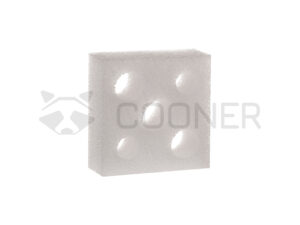
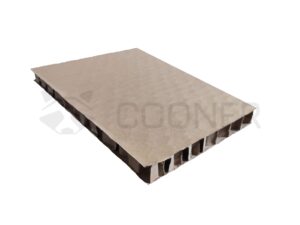
The closest alternative is moulded pulp – a formed part made from paper fibre. It suits applications where the product does not need to be visible, higher weights and cases where a paper mono-material is the goal. A blister is the better choice when the product should be visible, for small and intricate shapes and where a smooth, abrasion-free surface is needed. For shock absorption with heavy parts, loose fill and foam cut-outs are used; for repeated in-house transport, corrugated plastic.
What to send with your enquiry
- A product sample, drawing or 3D data – a physical sample is the most accurate
- Target environment: retail, transport or production
- Required type and material, plus any requirements for recycled content or ESD
- Units per pack and expected annual quantity
- Whether you also need a printed card or only the plastic part
Frequently asked questions
What are protective blisters?
Vacuum-formed shells, trays and inserts with no display function. Rather than on a shelf, they go inside the shipping pack or into production. They hold the product in place, protect its surface from abrasion and allow several pieces to be arranged in a single layer.
What is the difference between a heat-sealed and a welded blister?
A heat-sealed blister is a single shell sealed onto a card with a heat-seal coating – more economical and opened by tearing the card. A welded blister consists of two shells joined around the perimeter with the card inside – stronger and harder to open.
Is a sample required for production?
No, but it is the most reliable basis – the cavity geometry can be derived from it more accurately than from a drawing. If no sample is available, please send a drawing or 3D data.
Do you keep blisters in stock?
No. A blister is always made for a specific product. Stock is only built up for subsequent repeat production.
From what quantity is a blister worthwhile?
It depends on the size of the part, the complexity of the shape and the mould material. Cheaper wood or MDF moulds are used for small runs and prototypes. Send us the product dimensions and the expected annual quantity and we will assess it for your order.
Is a blister recyclable?
A mono-material shell made of PET or PS is. Permanently joined plastic and paper is a complication – if sorting is a requirement, choose the slide-card type or moulded pulp.