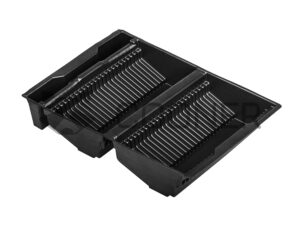
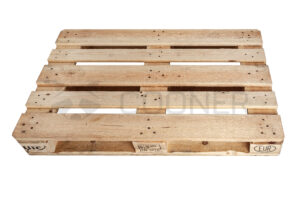
Paper honeycomb
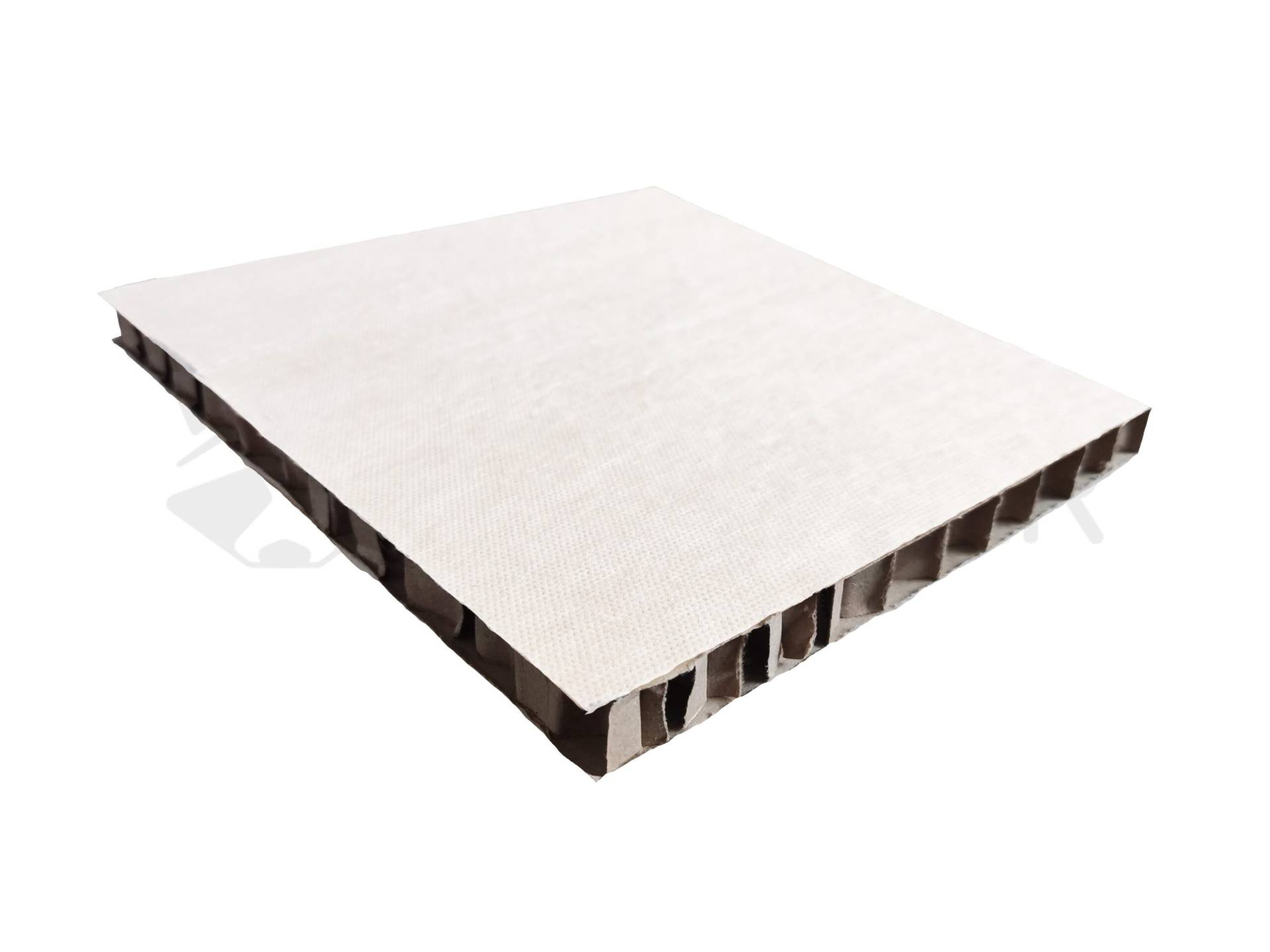
Paper honeycomb board is a lightweight yet very strong panel consisting of a paper core with a honeycomb structure, reinforced on both sides by liner sheets. This construction gives the board high strength and rigidity with minimal weight, just like a natural honeycomb. Being made entirely of paper, it is easy to recycle and serves as an excellent replacement for heavier or plastic materials.
What paper honeycomb board is suitable for
- Pallet fillers and layer pads – strong, light layers for stable loading and protection of shipments
- Structural and fixing parts – die-cut shapes and fixings that hold goods in place
- Eco-friendly replacement – a fully recyclable alternative to wood, EPS and plastic boards
- Light and strong – high stiffness at low weight reduces shipping costs
- Surface lamination option – the board can be covered with another material for better abrasion resistance and appearance
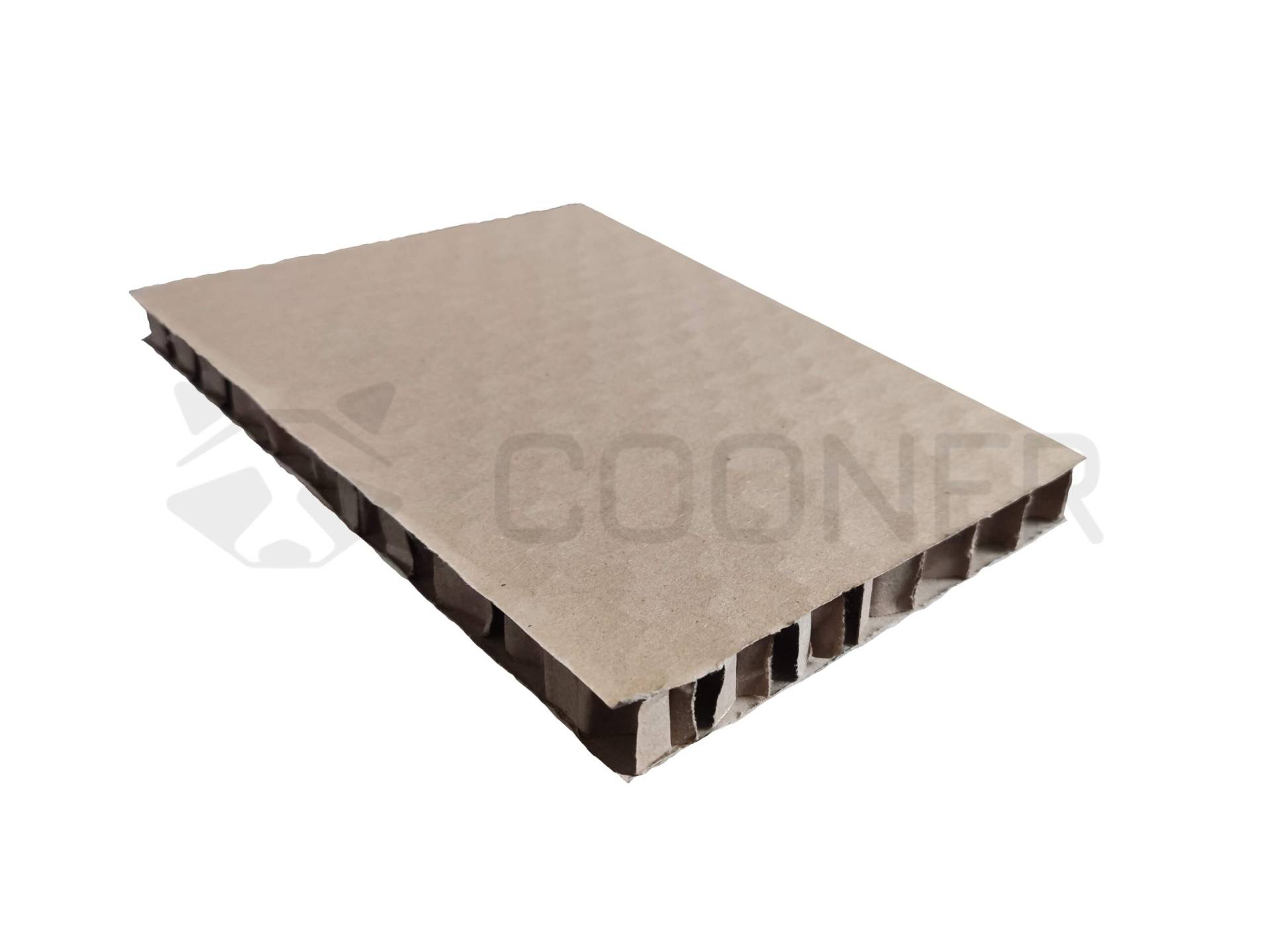
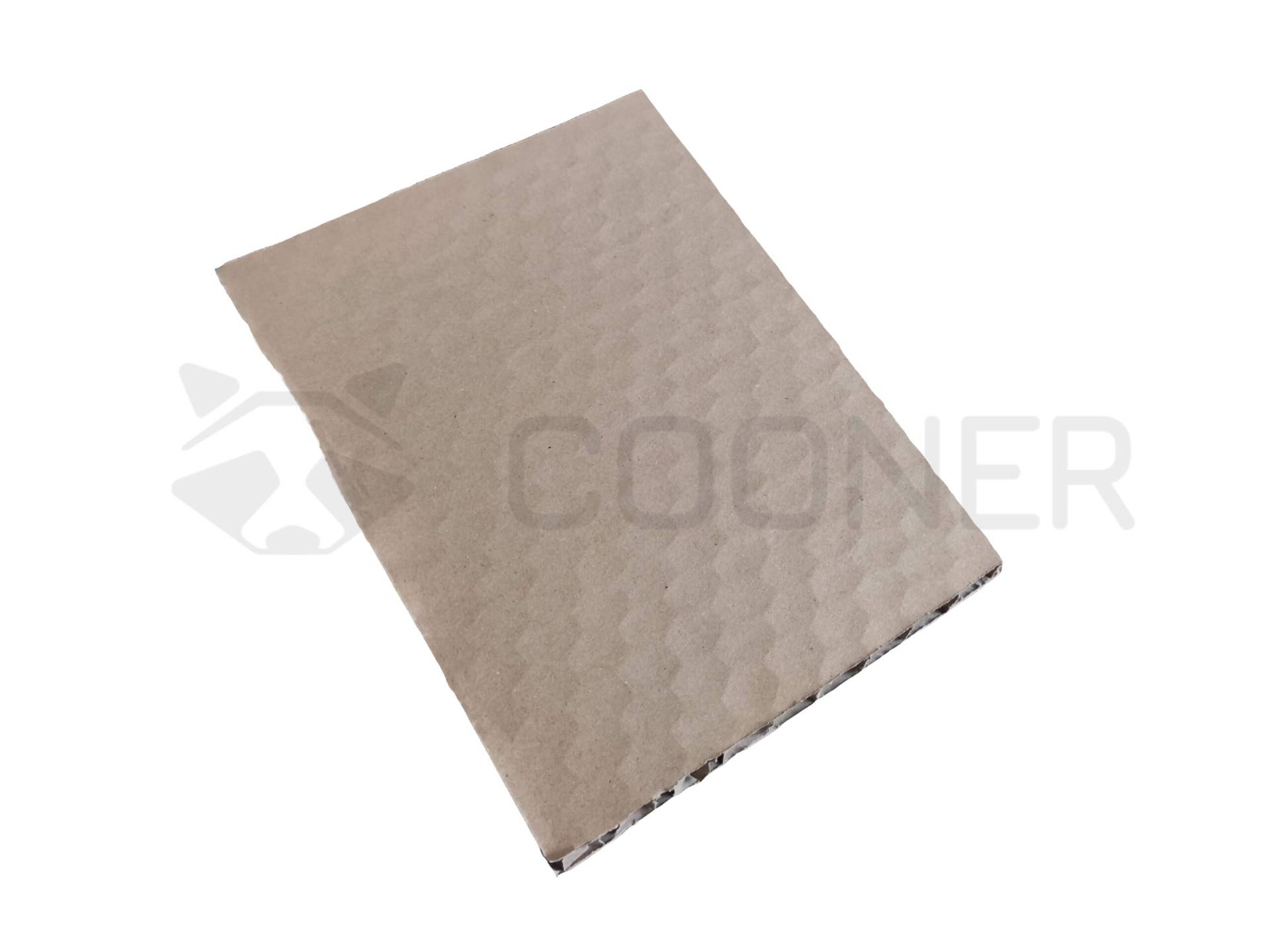




How a honeycomb board is built
The core is made from strips of paper glued together along offset lines to form a block. The block is cut to the required height and expanded – hexagonal cells open up between the glue lines, oriented perpendicular to the surface of the board. Facing paper is then glued to both sides of the core.
Most of the board’s volume is air. Loads perpendicular to the surface are carried by the vertical cell walls, and the board spreads them over its whole area. On its own, the core would buckle sideways under pressure; the facings stabilise it, spread point loads and give the board its bending stiffness.
Board parameters
Honeycomb boards are described by four related parameters. The ranges given are common in the industry.
- Thickness – From roughly 10 to 100 mm. Thinner boards serve as layer pads, thicker ones as load-bearing and structural parts.
- Cell size – Usually 8–25 mm. A smaller cell means a denser core, higher compressive strength and stiffness, but also a higher basis weight.
- Facing – Testliner of roughly 125–200 g/m² or kraftliner of 200–300 g/m². Kraftliner is stiffer, more abrasion-resistant and has a smoother surface for printing. The surface is usually brown or white.
- Surface finish and format – The board can be laminated, i.e. covered with another material for better abrasion resistance or appearance – for example a smooth facing paper or a textile. Besides whole boards, honeycomb is also made into die-cut parts and cut pieces to specification. Boards are commonly made in pallet-based formats such as 1200 × 800 mm, as well as in large formats of around 2000 × 1000 mm.
Applications
Honeycomb is chosen where the pack has to carry a load or define a space, not just wrap the goods.
- Pallet layer pads – Several layers of boxes with heavier goods stand on a pallet, the bottom row sags, the corners collapse and the stack loses its shape. A board placed between the layers spreads the load from the corners and edges over the whole area and levels an uneven layer. A board on top protects the upper row during stacking.
- Filling space in a box – Unlike soft void fill, it keeps its shape, so the goods do not move.
- Structural and retention parts – Die-cut shapes, partitions, bases and lids. An inserted board also reinforces the wall or base of a large box with only a small increase in weight.
- Replacement for wood, EPS and plastic boards where the aim is paper packaging.
Points to watch
- Moisture – As air humidity rises, the paper softens and the board loses stiffness and compressive strength; changing humidity weakens it even more. Honeycomb belongs in a dry environment; facings with moisture-resistant treatment are available. Please mention an unheated warehouse, cold store or sea freight in your enquiry.
- Direction of load – The board is strongest in compression perpendicular to its surface and carries less on its edge. Take this into account when designing the part.
- Long-term load – Short-term compressive strength does not apply to long-term static loads. If a pallet is to stand in the warehouse for a longer period, test the load with your own goods.
- Cutting – Cut with a sharp knife, thicker boards with a saw. A blunt tool crushes the cells and frays the edge. Precise and repeated shapes are best ordered as die-cut parts.
- Support – The board should lie on a flat surface and should not overhang the outline of the pallet.
- Sorting – A board without plastic layers goes into paper recycling. Plastic lamination or covering with another material turns it into a composite pack.
Honeycomb or another material
The most common comparison is with EPS packaging. Honeycomb carries loads and keeps its shape, EPS absorbs shocks and insulates. If the product needs drop protection, a precise moulded cavity or thermal insulation, EPS is more suitable. Soft void fill such as crumpled paper or bubble wrap protects surfaces and fills space but does not carry loads. Where a thin flat layer is enough, paper dividers will do.
Compared with wooden layer boards, honeycomb is lighter, because most of its volume is air. Paper packaging is also outside the scope of the international standard ISPM 15, which requires treatment of wood packaging material for export; however, check the specific requirements of the destination country. Honeycomb is not suitable for repeated use under heavy loads – that remains the domain of wood.
What to send with your enquiry
- Function: pallet layer pad, filling space or structural part
- Weight and dimensions of the goods or of the layer the board is to carry
- Required board thickness and format, or a drawing or sample of the part, and the quantity
- Environment: damp, cold, export, long-term storage
Frequently asked questions
What is paper honeycomb?
A board with a core of paper cells shaped like a beehive, covered with paper on both sides. The name describes the structure of the core, not the type of paper.
How much load can paper honeycomb carry?
In compression perpendicular to its surface, honeycomb is load-bearing and is commonly used under pallet layers. The specific load capacity depends on board thickness, cell size and facing, and applies to evenly distributed loads. Send us the weight and dimensions of the goods and we will come back to you with a proposed solution.
Honeycomb or corrugated board?
Corrugated board has a fluted layer between its liners that is easily crushed under a point load. Honeycomb carries pressure perpendicular to its surface more evenly; in a comparative test of thin honeycomb board and A-flute corrugated board, its flat crush resistance was roughly three times higher. Corrugated board is sufficient where the main aim is to separate layers.
Can honeycomb be cut in-house?
Yes, with ordinary tools – a sharp knife on a cutting mat, and a saw for thicker boards. For repeated shapes, ready-made die-cut parts are worthwhile.
How does honeycomb cope with moisture?
Poorly. Paper loses strength in damp conditions. In a humid environment, the board needs to be protected with film, given a moisture-resistant facing, or replaced by another material. Please describe the environment in your enquiry.
How is honeycomb disposed of?
A board without plastic layers or lamination goes into paper recycling; the recipient does not need to take it apart.