Pallets
Pallets form the foundation of goods handling, storage, and transport – allowing entire units to be loaded and moved at once using a forklift. We offer both new and used pallets in wood, paper, and plastic designs, so you can choose based on load capacity, hygienic requirements, and budget. We will gladly advise you on selecting the right type based on your shipping method.
What types of pallets we offer
- Wooden and EUR pallets – classic load-bearing pallets for standard logistics, both new and used
- Paper pallets – lightweight and fully recyclable, suitable for air freight and export
- Plastic pallets – washable and moisture-resistant, ideal for the food and pharmaceutical industries
- New and used – an economical choice based on your budget and application




Wooden EUR pallets
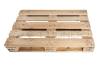
The standard EUR pallet measures 1200 × 800 × 144 mm and weighs around 25 kg. It consists of 11 boards, 9 blocks and 78 nails in a prescribed pattern that gives the pallet diagonal rigidity. It is a four-way pallet: forklift tines can enter from all sides. Its construction is described in the EN 13698-1 standard.
- Load capacity – The safe working load of a single pallet is 1,500 kg. In a stack on a level, solid floor, the bottom pallet may carry a maximum of 5,500 kg.
- Marking – Since 2013, pallets produced under licence from the EPAL association have carried the EPAL mark in an oval on both corner blocks, and the IPPC heat-treatment mark on the centre blocks. Pallets made before 2013 carry a combination of the EPAL and EUR marks; pallets made under railway (UIC) licence carry the EUR mark and a railway mark. If you exchange pallets with your customer, check in advance which marking they accept.
- Exchange and repair – EUR pallets are exchanged one for one across Europe in an open pool. EPAL pallets may only be repaired by licensed operations.
- Used pallets – The EPAL classification divides them into classes A, B and C according to appearance and wear. Class A is light in colour and nearly as good as new, class B has darker wood and signs of use, class C is dark and visibly worn. New pallets or class A are usually chosen for food and export; class B is sufficient for warehousing and in-house transport.
Besides the 1200 × 800 mm format, 1200 × 1000 mm pallets and 800 × 600 mm half pallets are also used. One-way wooden pallets are of lighter construction, are not part of the exchange pool, and their dimensions and load capacity are set by the manufacturer.
ISPM 15 and export outside the EU
- Requirement – Wood packaging material made of solid wood, including pallets, must comply with the international standard ISPM 15 when exported outside the EU. Within the EU, treatment is generally not required, with a few exceptions.
- Treatment – Heat treatment (HT) is used in the Czech Republic: the core of the wood is heated to at least 56 °C for at least 30 minutes. Fumigation with methyl bromide is banned in the EU.
- Mark – It contains the IPPC symbol, the country code, the operator’s registration number and the treatment code, for example HT. In the Czech Republic, authorisation to treat and mark is issued by ÚKZÚZ (the Central Institute for Supervising and Testing in Agriculture).
- Exemptions – The standard does not apply to processed wood bonded with heat and pressure – plywood, OSB and particleboard – or to paper and plastic.
- Repairs – If a component is replaced with untreated wood during repair, the whole pallet must be treated and marked again.
- Mould – Heat treatment does not protect against mould. Mould develops on damp wood; the solution is wood that has been dried beforehand.
Paper pallets
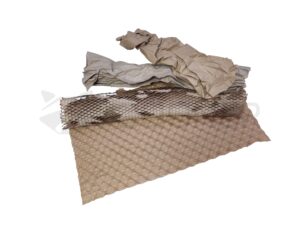
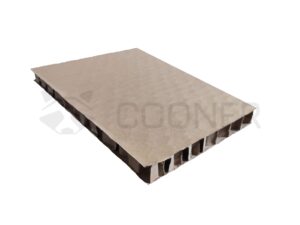
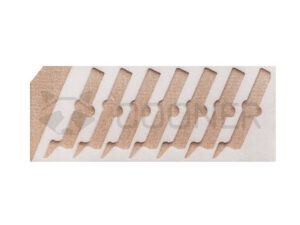
These are made from honeycomb board with feet, from corrugated board or from moulded pulp. They weigh roughly 1.5–4 kg, which is why they are used in air freight and for one-way export. ISPM 15 does not apply to them. Their load capacity is lower than that of wood, in the order of 200–600 kg depending on the type. Moulded pulp pallets nest inside each other and take up little space when empty. A paper pallet cannot withstand water or outdoor storage and needs a dry warehouse.
Plastic pallets
These are made from polyethylene (HDPE) or polypropylene. They do not absorb moisture, can be washed, have no splinters or nails, and ISPM 15 does not apply to them. They are used in closed-loop systems, in automated warehouses and wherever the pallet is cleaned regularly. For plastic pallets, load capacity is stated separately for static, dynamic and racking use – for one type on the market, for example, 5,000 kg, 1,250 kg and 800 kg.
Pallets we supply
EUR wooden pallets 1200 × 800 mm, new and used, one-way wooden pallets 1200 × 800 mm, and moulded pulp paper pallets 800 × 600 mm. Plastic pallets and other formats are handled according to your requirements.
Load capacity: static, dynamic, racking
- Static load capacity applies to a pallet standing on a level floor. It is the highest value.
- Dynamic load capacity applies during handling by forklift or on a conveyor.
- Racking load capacity applies to a pallet resting on two rack beams with no support in the middle. Paper pallets usually have no racking rating.
All values apply to an evenly distributed load.
Points to watch
- Goods overhanging the pallet edge – The load is then carried by the edges of the cartons, stacking strength falls and the film anchors the load to the pallet less effectively.
- Splinters and dirt – The bottom and top of the unit load are protected by layer pads.
- Damp wood – Store pallets dry and under cover, otherwise there is a risk of mould – even with heat-treated pallets.
- Used pallets in automated warehouses – Class C is not suitable for them; agree the class in advance.
The pallet and other parts of the unit load
The load on the pallet is stabilised by stretch film, corners and edges are protected by cardboard edge protectors, and layers are separated by a layer pad or paper honeycomb. For small parts and order picking, crates and boxes in the 600 × 400 mm format are stacked on the pallet – exactly four per layer on a 1200 × 800 mm pallet. Formed parts made from paper fibre are described on the moulded pulp page.
Reuse and the PPWR
From 1 January 2030, the PPWR regulation requires companies that transport goods within the EU on pallets, among other formats, to ensure that at least 40 % of this transport packaging is reusable within a re-use system. A stricter requirement applies to transport between a company’s own sites and between companies in the same Member State, although the regulation contains a number of exemptions.
What to send with your enquiry
- Pallet type: EUR, one-way, paper or plastic; new, or used and in which class
- Dimensions and number of pieces
- Load weight and storage method: on the floor, in a stack or in a rack
- Destination: EU, export outside the EU, air freight
- Environment: food, humidity, automated warehouse
- Whether you exchange pallets with your customer
Frequently asked questions
What does the IPPC mark with the HT code mean?
That the pallet has been heat treated in accordance with ISPM 15 and may be used for export outside the EU. The country code and registration number identify the operator who carried out the treatment.
Do I need ISPM 15 within the EU as well?
Generally not. The requirements concern exports outside the EU and imports into the EU. If your customer requires treated pallets, please state this in your enquiry.
Why use a paper pallet for air freight?
It weighs roughly 1.5–4 kg, compared with around 25 kg for a EUR pallet, and needs no phytosanitary treatment. In air freight, this reduces the weight of the shipment.
Where does a used paper pallet go?
If it is dry and uncontaminated, it goes into paper recycling.