Envelopes
Envelopes are used for the safe dispatch of documents, small items, and fragile goods. Depending on the contents, you can choose between standard paper envelopes and bubble-lined variants that absorb shocks during transport. The right envelope protects the shipment while saving money on unnecessarily large packaging.
What types of envelopes we offer
- Bubble mailers – with an inner bubble lining to protect fragile and electronic goods
- Paper envelopes – for documents and flat contents, an eco-friendly and recyclable option
(also ESD) - Plastic mailing envelopes (bags) – durable, water-resistant envelopes for everyday e-shop dispatch
- Self-adhesive flap envelopes – easy to seal without glue or tape





Paper envelopes and formats
Envelope formats are defined by ISO 269 (ČSN ISO 269 in the Czech Republic), which corresponds to the German DIN 678. The series differ in what fits inside:
- C6 (114 × 162 mm) – For A6, or A4 folded into quarters.
- DL (110 × 220 mm) – For A4 folded into thirds, the most common envelope for letters.
- C5 (162 × 229 mm) – For A5, or A4 folded in half.
- C4 (229 × 324 mm) – For unfolded A4.
- B5 (176 × 250 mm) and B4 (250 × 353 mm) – For thicker printed matter and catalogues in A5 and A4 format.
- E4 (280 × 400 mm) – For bulkier contents; a B4 envelope also fits inside.
The flap is closed with a moisture-activated gum, a self-adhesive strip under a peel-off release strip, or two layers of adhesive that bond to each other when pressed together. Envelopes may have an address window. Reinforced envelopes with fibres in the paper and a strengthened bottom are made for heavier contents, and security envelopes with a tamper-evident strip for valuables.
Envelopes for goods
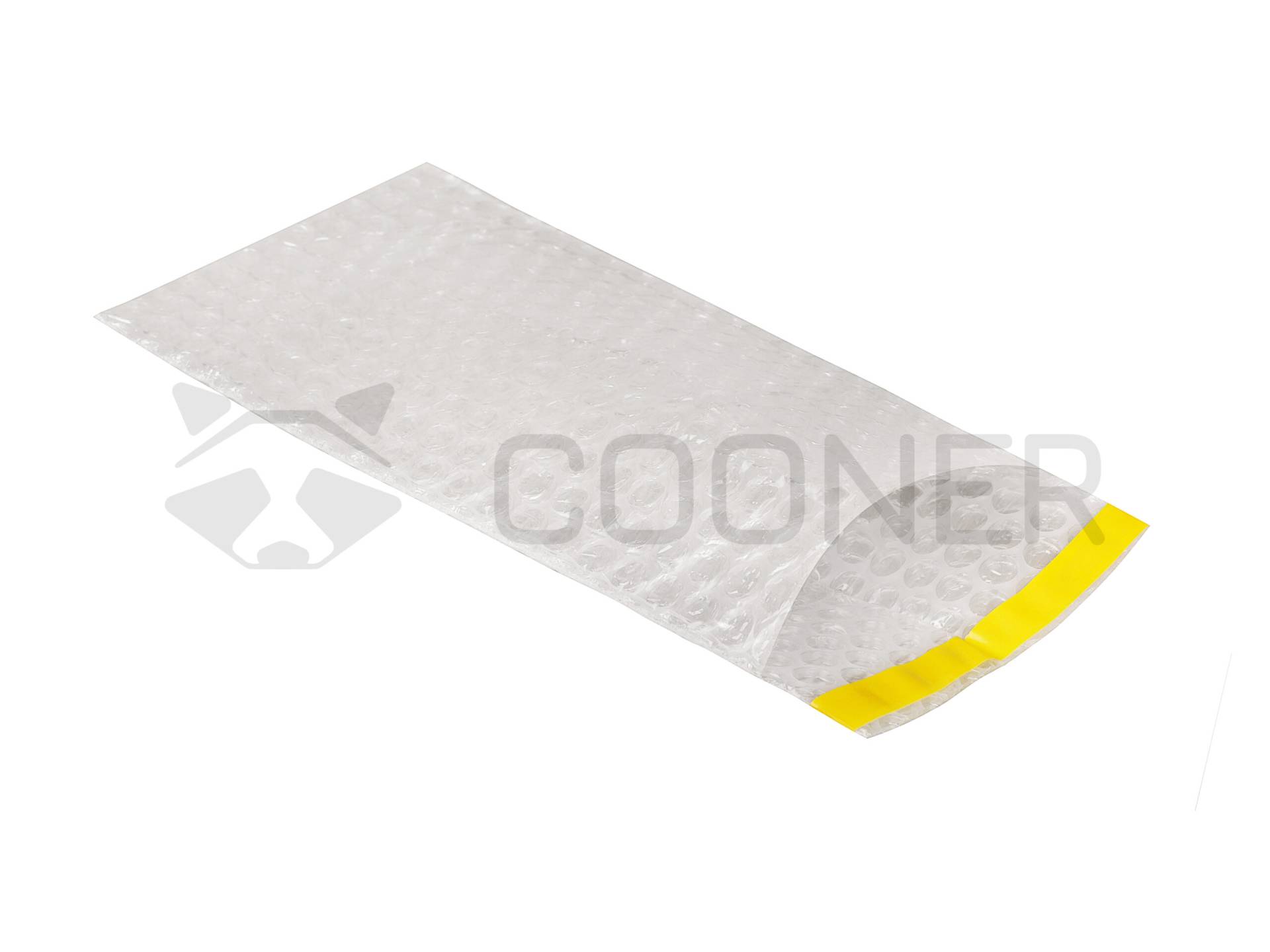
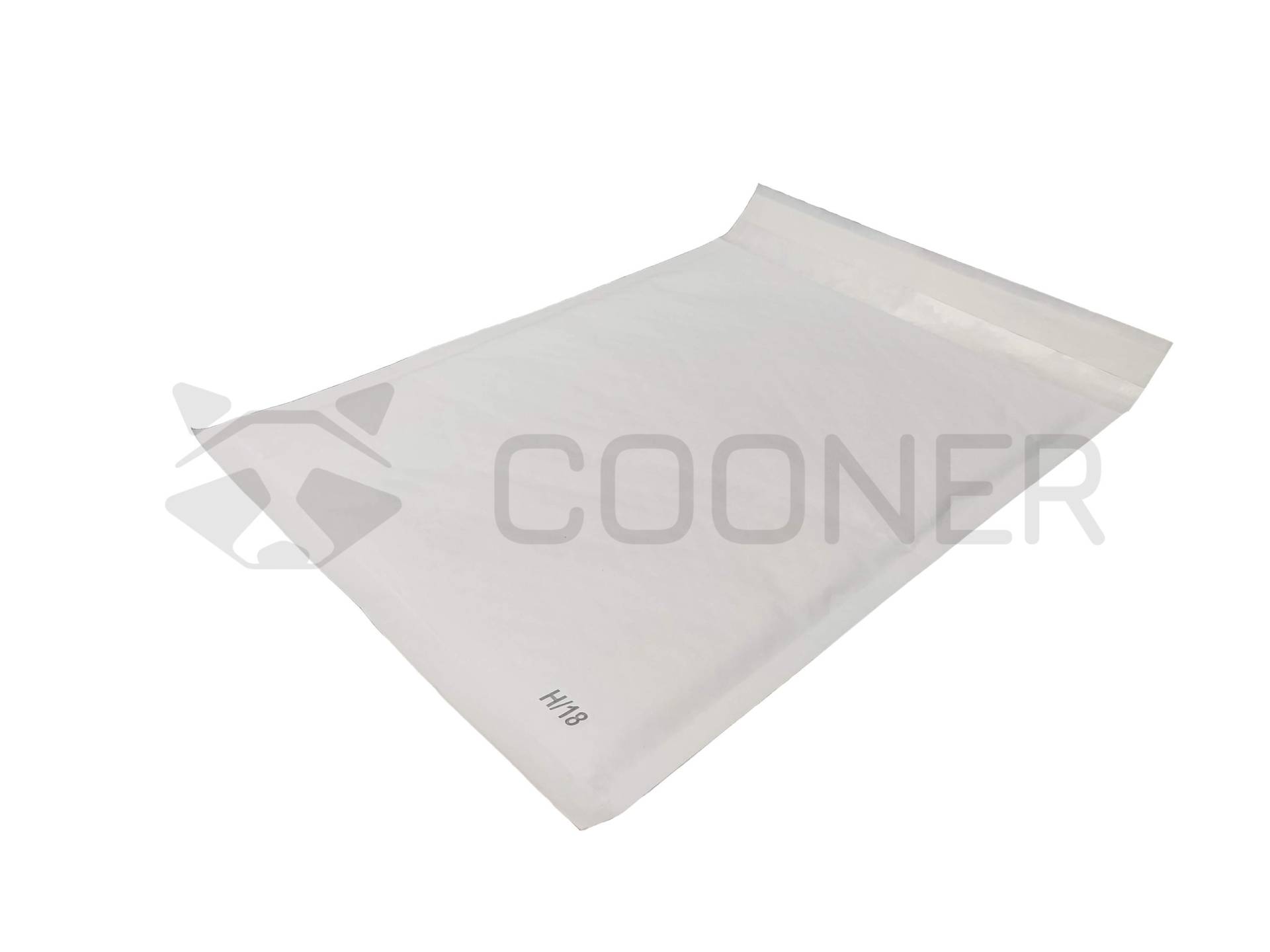
- Bubble envelope – The outer layer is white or brown paper; inside is polyethylene bubble film, which absorbs impacts. Sizes are designated by a letter and number, from A/11 (internal dimensions of roughly 95 × 165 mm) to K/20 (roughly 350 × 470 mm), with a tolerance of about ±5 %. The most widely used sizes are D/14 for A5 and G/17 for A4.
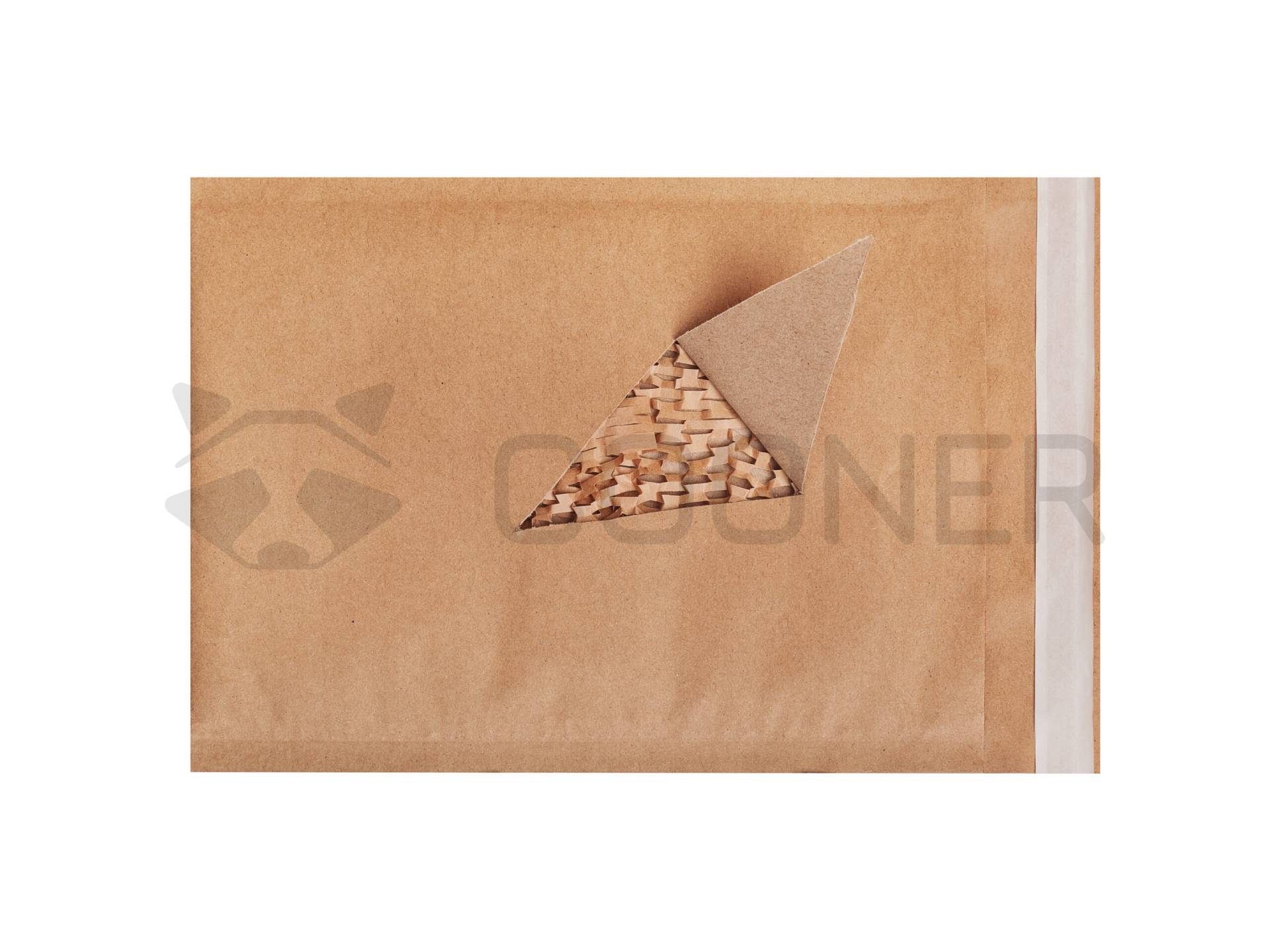
- Paper envelope with paper padding – Instead of bubble film, it has padding made of paper or board, so it is made entirely of paper.
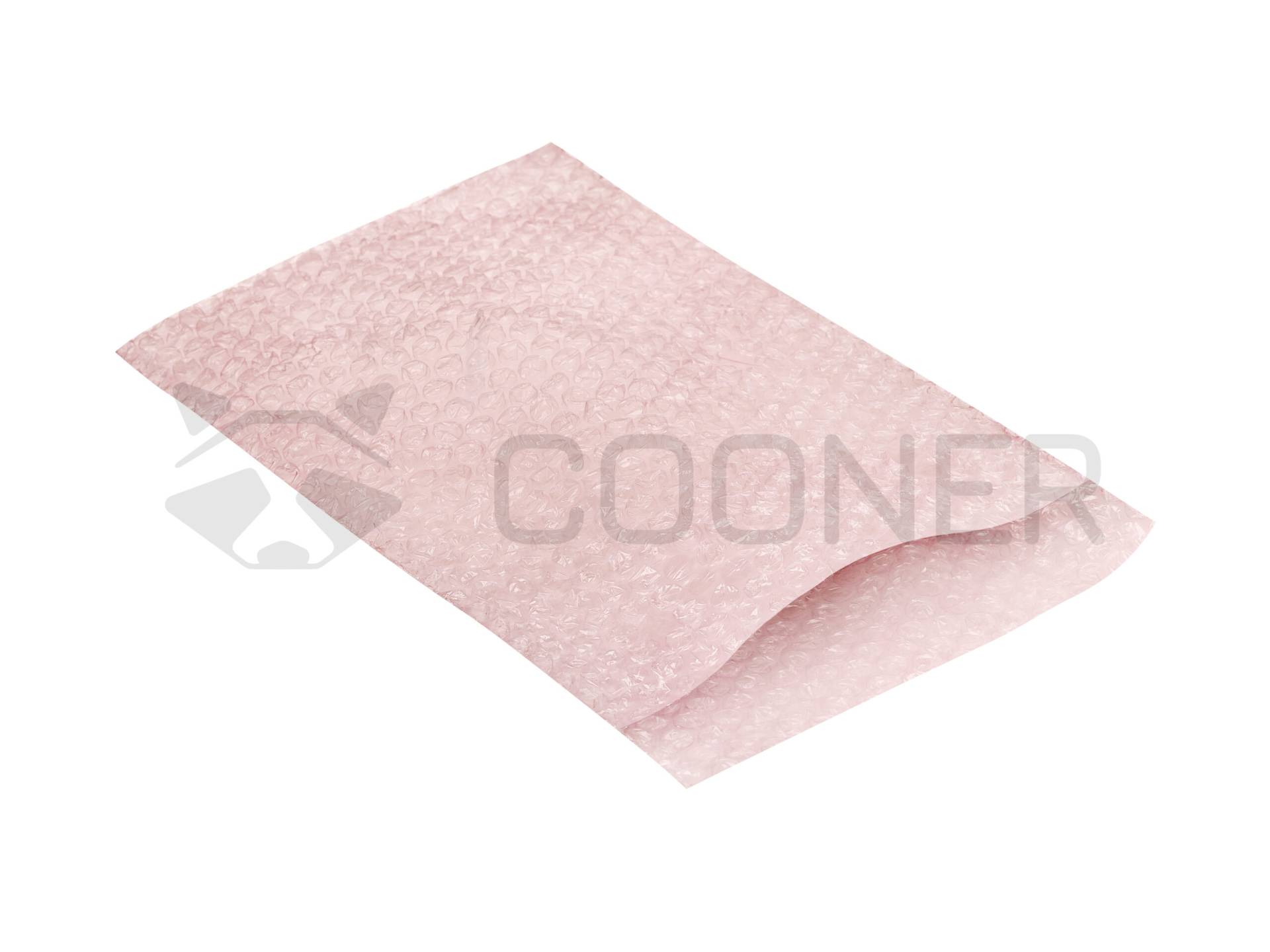
- Antistatic bubble envelope – Usually pink, with an additive that limits the build-up of static charge. However, it does not protect against external discharge; see bubble wrap for more.
- Board envelope – A rigid envelope made of board for flat goods and documents that must not be bent.
- Plastic mailing bag – Made from co-extruded low-density polyethylene (LDPE) film: the outer layer is white and the inner layer black, so the bag is opaque. The film is usually around 60 µm thick, heavy-duty versions up to 90 µm. The bag is waterproof and tear-resistant. It is mainly suited to textiles and goods that will not break.
We supply bubble envelopes, paper envelopes including envelopes with paper padding, board envelopes and plastic mailing bags. We also supply bubble bags with a self-seal closure and in a pink antistatic version.
Choosing the right envelope
- Contents – Documents go into a paper envelope of the appropriate format, small and fragile goods into a bubble envelope, textiles into a plastic mailing bag. A board envelope is intended for flat items that must not be bent.
- Size and thickness – A bubble envelope has no gusset. The thickness of the contents must therefore be added to their width and length. An A5 catalogue fits into a D/14, but five catalogues stacked together need an F/16 or larger.
- Moisture – A plastic mailing bag protects against water; paper and bubble envelopes do not.
- Returns – Plastic mailing bags are also made with a second adhesive strip, which the customer uses to reseal the bag when returning goods.
- Sorting by the recipient – An envelope made entirely of paper goes into paper collection. A bubble envelope must first be separated into paper and film.
Points to watch
- Heavy, sharp and valuable items – They do not belong in a bubble envelope; a box with void fill or a security envelope is a better choice.
- Opening the shipment – Plastic mailing bags have a permanent adhesive, so they cannot be opened without visible damage.
- Film window – It does not prevent a paper envelope from going into paper collection.
Related products
Bubble wrap is used to wrap goods. Bags are intended for packing individual items, and larger shipments are sent in corrugated boxes. The address and shipment details are carried by a label.
What to send with your enquiry
- Contents: documents or goods; dimensions, thickness and weight
- Envelope type, format or internal dimensions
- Colour (white, brown), window, closure type, and a returns strip if required
- For plastic mailing bags, the film thickness
- Monthly quantity
Frequently asked questions
Which envelope does an A4 sheet fit into?
Unfolded into a C4, folded in half into a C5, folded into thirds into a DL. Thicker documents and A4 catalogues are sent in a B4 envelope.
How do I choose the size of a bubble envelope?
The size in the designation is the internal one. Add the thickness of the contents to their width and length, because the envelope has no gusset.
What is the difference between a bubble envelope and a plastic mailing bag?
A bubble envelope absorbs impacts and is therefore suitable for small and fragile goods. A plastic mailing bag does not absorb impacts, but it is waterproof, opaque and tear-resistant. It is used mainly for textiles.
Where does a used bubble envelope go?
If the film can be separated from the paper, the paper goes into paper collection and the clean film into plastics. Otherwise the envelope goes into mixed waste. An envelope made entirely of paper goes into paper collection as a whole.