Paper edge protectors and pads
Paper edge protectors and dividers are an important part of packing goods on pallets – they protect the corners and edges of products from crushing and reinforce the whole pallet unit. Edge boards stabilise the load under strapping or stretch film, while dividers separate and protect individual layers of goods. We offer a wide range of cardboard edge protectors and dividers in various sizes.
What we offer
- Paper edge protectors (corner angles) – protective corner profiles that guard the edges and strengthen the pallet
- Machine board layer pads – smooth pads for separating layers of goods
- Corrugated board layer pads – stronger pads with higher stiffness and cushioning
- Pallet load stabilisation – a firm grip on the load under stretch film or strapping




How edge protectors and layer pads are made
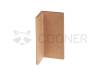
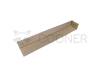
A paper edge protector consists of several layers of board that are glued together and formed under pressure into a right angle, i.e. an L-profile. There are also U-profiles for the edges of panels and folded corner pieces. The edge protector is fitted over a vertical corner or a horizontal edge and spreads pressure that would otherwise act at a single point along its whole length.
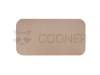
A layer pad is a flat sheet of board placed between layers of goods, underneath them or on top of the pallet load. It is cut or die-cut to format, often with rounded corners.
For example, we supply brown L-profile edge protectors which, according to the manufacturer’s specification, are made from 100 % recycled board and are fully recyclable. They are intended for single use.
Types
There are these basic groups, which differ mainly in how they behave under pressure.
- Paper edge protectors (angle boards) – Vertically on pallet corners, horizontally under the strapping and as reinforcement for the edges of individual products. Common in the industry are leg widths of roughly 30–100 mm, wall thicknesses of 2–7 mm and lengths from a few centimetres to several metres. They are also made in a water-resistant version or with printing.
- Cardboard edge protectors with a lock – A cardboard edge protector folds into itself and holds its shape with a lock.
- Solid board layer pads – Smooth, dense board made from recovered paper with no flute, usually in grammages of roughly 300–900 g/m². It is thin, has no flute that could be crushed under a point load, and creates a flat surface for the next layer.
- Corrugated board layer pads – They have a fluted layer between the liners. They are thicker, stiffer in bending and better at absorbing shocks and vibration. Under a point load, however, the flute is crushed and the pad loses thickness.
Choosing the size
- Edge protector length matches the height of the goods actually being strapped, excluding the wooden pallet. A shorter edge protector transfers pressure to only part of the stack, and the strap cuts into the goods where it ends.
- Wall thickness increases with the weight of the pallet and the tension of the strapping.
- Layer pad format follows the footprint of the pallet, not the size of an individual box. It is usually slightly smaller so that it does not overhang – for example 1180 × 780 mm for a 1200 × 800 mm pallet.
- Rounded corners on layer pads do not tear the stretch film, so the pallet can be wrapped more tightly.
- Type of board – solid board where weight needs to be spread and a flat surface maintained, corrugated board where the aim is to separate layers and absorb shocks.
Points to watch
Complaints about crushed goods usually arise not from missing edge protectors, but from choosing or fitting them incorrectly.
- Edge protector shorter than the strapped height – The strap cuts in exactly where the profile ends.
- Wall too thin for a heavy pallet – The profile breaks under the strap and stops doing its job.
- Corrugated layer pad under a point load, for example under a shelving leg or a machine foot. The flute is crushed.
- Layer pad overhanging the pallet footprint – The overhanging material bends and lifts the layer.
- Painted, glossy and printed surfaces – Turn the layer pad with its smooth side towards the product.
- Storage – Edge protectors and layer pads belong in a dry, ventilated warehouse, stored flat and away from heaters. Both moisture and drying out deform them; layer pads stored upright will warp.
- Sharp product edges cut through the layer pad.
Paper or another material
Paper is chosen where the pack travels one way to the customer and should end up in paper recycling, or where the customer requires a paper mono-material. Where the pack circulates between sites, is washed or is permanently damp, paper is not suitable and plastic profiles are used. For painted and glossy surfaces that are marked even by slight pressure, softer foam profiles made of PE foam are suitable. Where a thicker and stiffer layer than a flat pad is needed, paper honeycomb is used. Edge protectors and layer pads are combined with stretch film or strapping.
What to send with your enquiry
- Pallet footprint and the height of the goods actually being strapped, excluding the wooden pallet
- Pallet weight and securing method: stretch film, strapping or both
- Type of goods and the sensitivity of their surface (painted, glossy, printed)
- Whether the pallet travels one way to the customer or circulates between sites
- Warehouse conditions, especially heating and humidity
- Estimated annual consumption and a photo of the stacked and secured pallet
A photo of the pallet is often more useful for the design than the rest of the list.
Frequently asked questions
What is the difference between a paper edge protector and a layer pad?
An edge protector is an angle, i.e. a strip of board formed into a right angle. It is fitted over a corner or edge and protects it from the pressure of the securing materials. A layer pad is a flat sheet placed between or under layers of goods. The edge protector works vertically and reinforces the pallet, the layer pad works horizontally, separating and levelling the layers. The two are commonly combined on one pallet.
What length of edge protector and what size of layer pad should I order?
The edge protector length follows the height of the goods being strapped, excluding the wooden pallet. The layer pad format follows the footprint of the pallet and is usually slightly smaller so that the material does not overhang. If you are unsure, send us the pallet dimensions and a photo of the stacked goods.
Can the edge protector length and layer pad format be adjusted?
In the industry, edge protectors are commonly made to length and layer pads are cut or die-cut to format. Tell us the required size, the weight of the goods and the estimated annual consumption, and we will confirm in our quotation what is feasible.
How do edge protectors and layer pads cope with damp and cold?
Paper absorbs moisture and loses strength. Cold alone, without moisture, is not a limitation, but wet operations or outdoor storage are. In such conditions a water-resistant version or a plastic profile is used, or the pallet is protected with film. Please state the storage conditions.
Where do used edge protectors and layer pads go?
The standard version without surface treatment is made entirely of paper and goes into paper recycling; nothing needs to be separated. With water-resistant or laminated versions, it depends on the type of treatment.