PE foams
PE foam products protect the product from impacts and, in the right design, can also serve as a professional solution for goods presentation. Flexible polyethylene foam is easy to shape, cut, and process, allowing the creation of fixations tailored precisely to the shape of the product. We offer custom manufacturing according to the customer’s wishes and requirements.
What we manufacture from PE foam
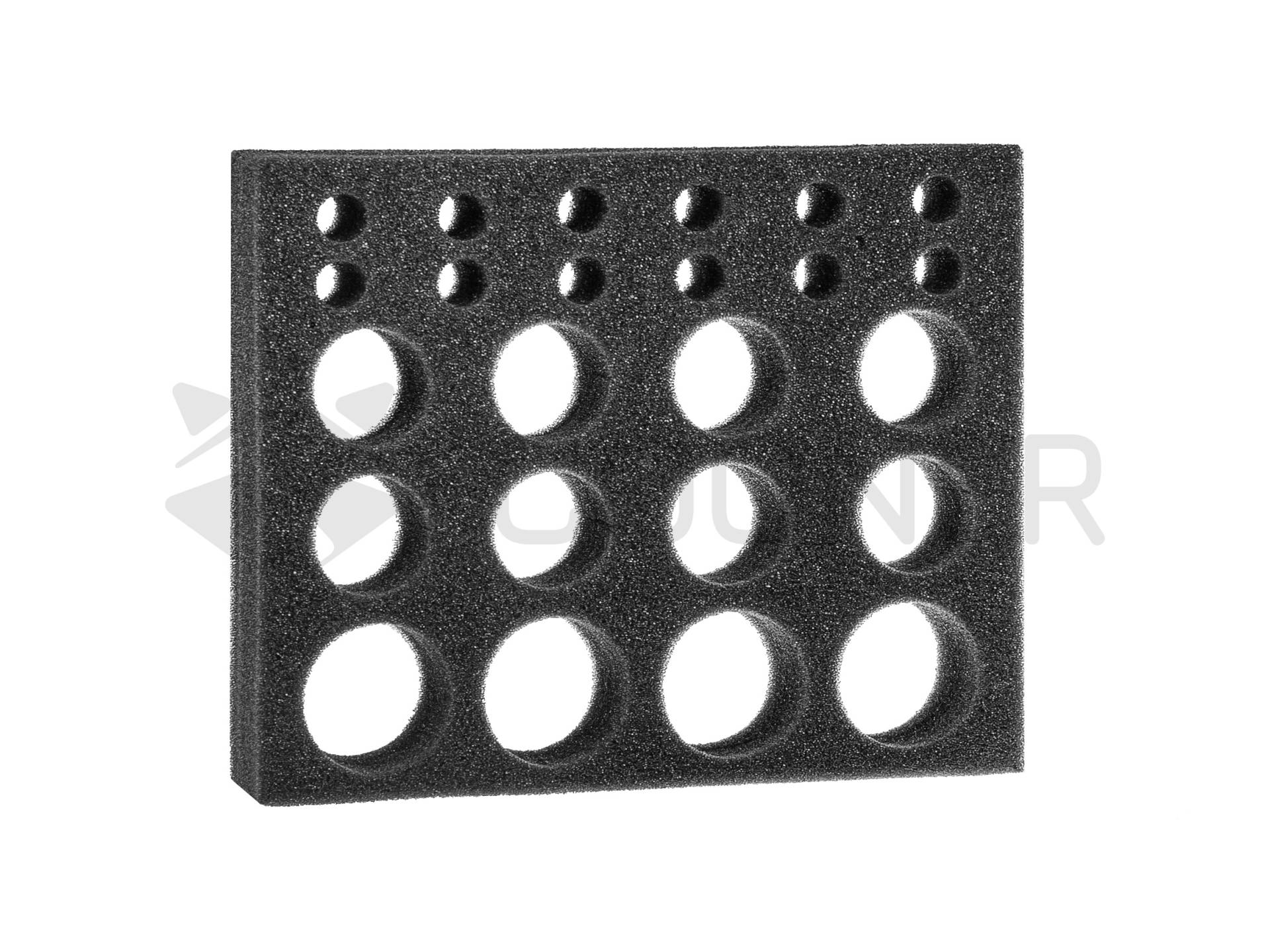
- Die-cut inserts – fixings cut exactly to the outline of the product for safe storage
- Moulded parts – shaped parts to protect and present delicate goods
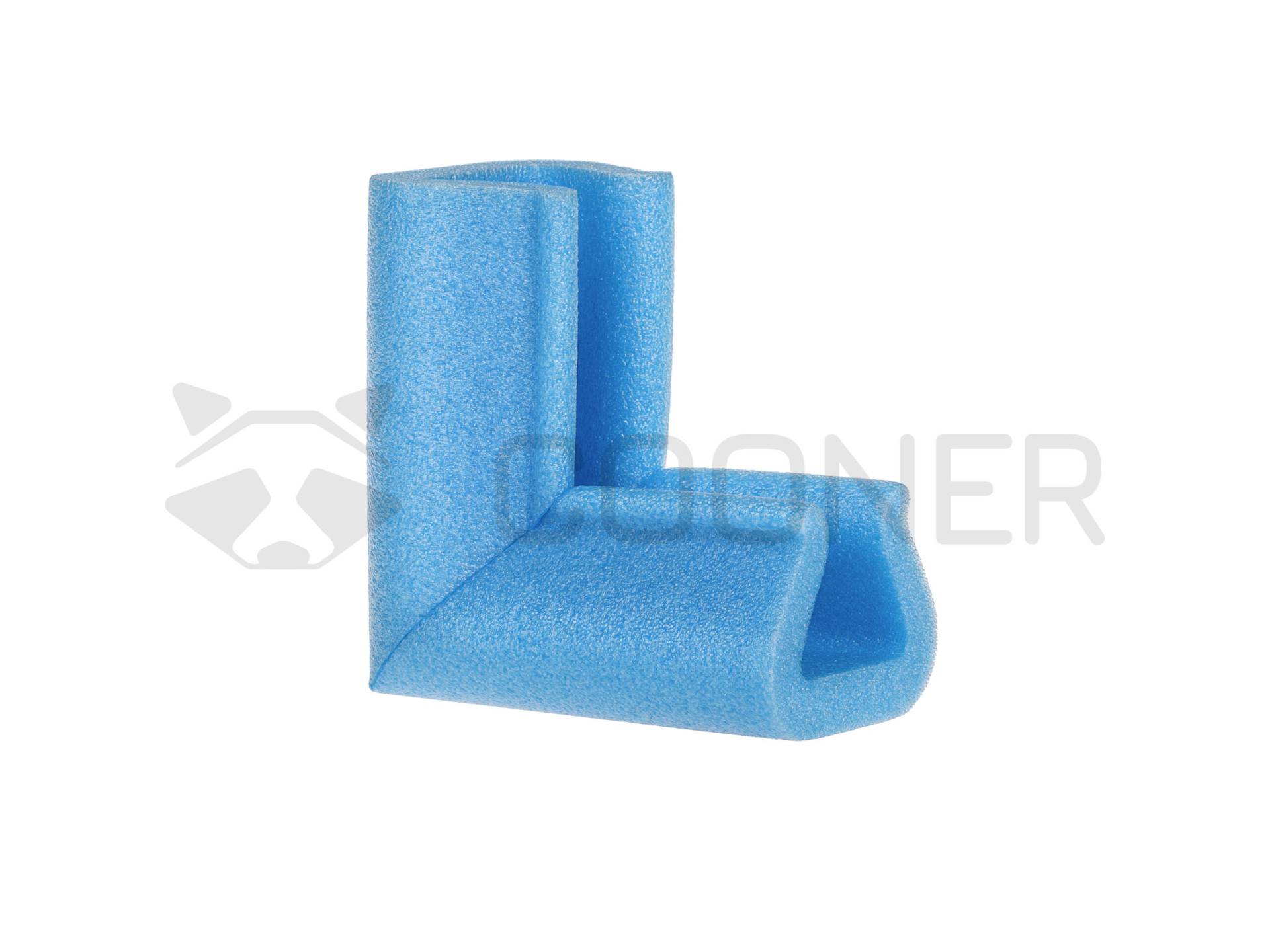
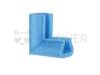
- Protective profiles and edges – protect the corners and edges of products during handling and transport
- Cut-to-size pieces – sheets and strips cut to the required dimensions
- Made-to-measure production – solutions to your brief and specification
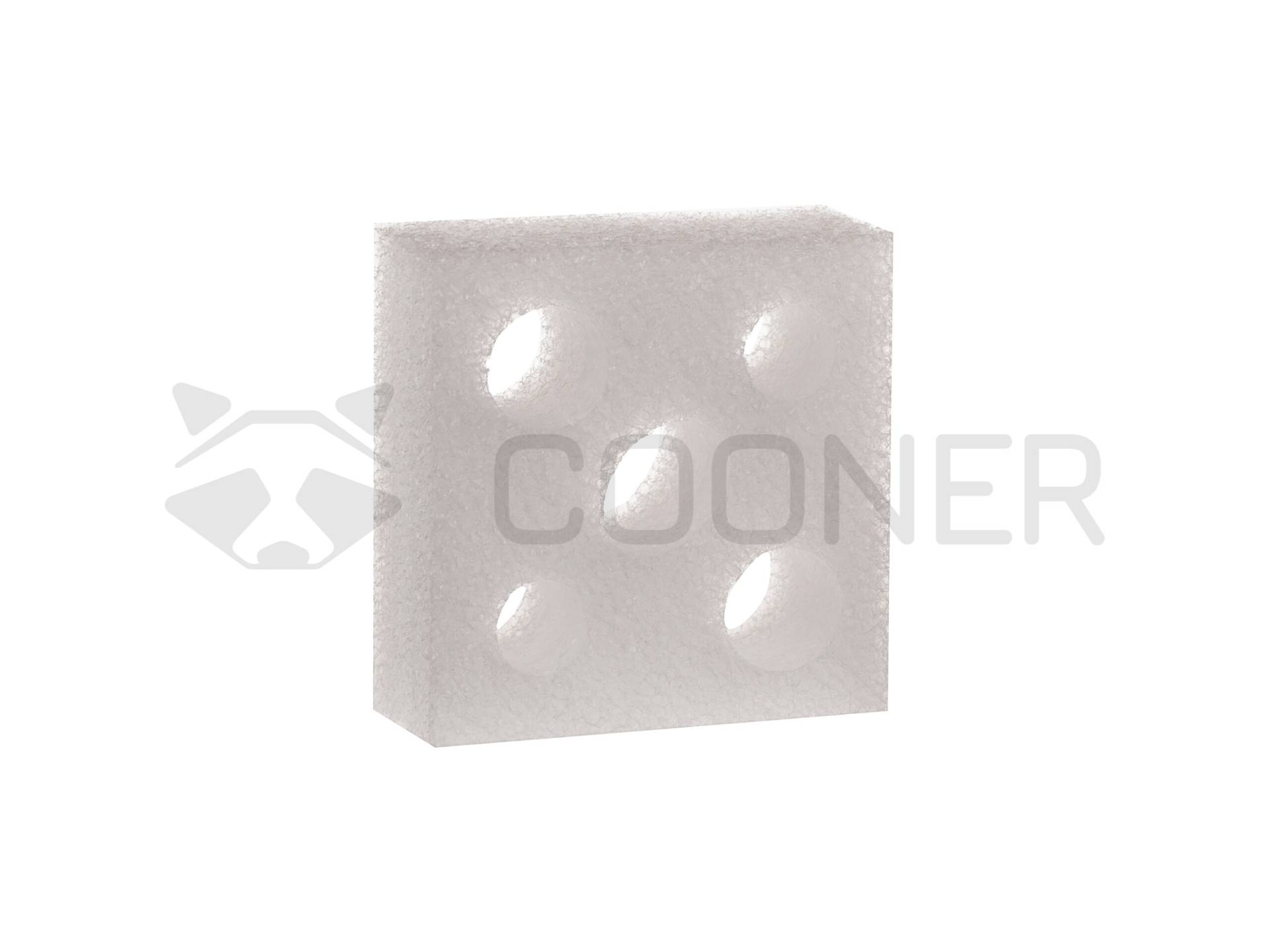




What PE foam is
The raw material is low-density polyethylene. For standard, non-crosslinked foam, a gas is injected into the molten polymer in the extruder, which foams it as it leaves the die. The result is a film or sheet made up of small closed cells. Crosslinked foam (known as XPE or IXPE) additionally undergoes chemical or radiation crosslinking. It has finer and more uniform cells, a smoother surface and recovers its shape better after repeated compression.
The density of packaging PE foams ranges roughly from 20 to 65 kg/m³, and stiffness increases with density. Thin foam films are made on rolls in thicknesses of around 1–5 mm, sheets in thicknesses of tens of millimetres. Thicker blocks are made by joining several layers. The closed cells absorb almost no water and the material is resistant to common chemicals.
Types
- Die-cut inserts – Inserts cut to the outline of the product, often as an insert with cut-outs that keeps several items apart.
- Shaped parts – Three-dimensionally shaped parts for both protection and presentation of goods.
- Protective profiles and edges – Foam profiles and corners that protect the edges and corners of products during handling.
- Cut-to-size pieces – Sheets and strips cut to size, for example as interleaving between layers or as a base pad.
We supply die-cut inserts, shaped parts, protective profiles and cut-to-size pieces made of PE foam to customer specifications. Foams are commonly available in natural white, black and other colours.
How the foam is processed
- Die cutting – A steel rule die cuts the whole outline in a single stroke. It suits repeat production; the tool is made once for a given shape. A die cut always goes through the full thickness of the material.
- Cutting without tooling – A waterjet, cutting plotter or router cuts directly from the drawing. This pays off for prototypes and smaller runs. A router can also create blind pockets in a solid block.
- Joining layers – Layers are joined by heat and pressure without adhesive, or they are glued. A pocket of a given depth can therefore also be made from die-cut layers placed on a solid base. Different densities and colours can be combined.
Which technology is used for a particular part is assessed according to its shape and quantity.
Choosing the right foam
- Weight and bearing area – What matters is the pressure the product exerts on the foam, i.e. its weight divided by the area on which it rests. Foam that is too soft bottoms out on impact; foam that is too stiff does not absorb the shock.
- Thickness – A thicker layer reduces the g-force in a drop but also makes the pack larger. The designer chooses it using cushion curves for the given drop height.
- Product surface – For lacquered and glossy surfaces, smooth foam is suitable, or crosslinked foam.
- Number of trips – For returnable packaging and repeated insertion, crosslinked foam is more suitable.
- Electronics – For sensitive components there is antistatic (usually pink) and conductive (black) foam.
Points to watch
- Sustained load – Under long-term pressure the foam gradually settles and does not return to its full thickness. For heavy parts that stay in the pack for a long time, allow for a larger bearing area.
- Pockets of a given depth – They cannot be made by die cutting; they are produced by bonding layers or by routing.
- Cavity size – A cavity that is too tight makes insertion difficult; one that is too loose does not hold the product.
- Antistatic treatment is not permanent – With pink foam containing an additive, the effect weakens over time. Carbon-loaded conductive foam has permanent properties.
- Combined materials – Foam bonded to board or another plastic is harder to sort. If this matters, use an insert made of a single material.
PE foam or another material
EPS packaging is stiffer and is also used for insulated boxes. After a severe impact, however, it remains permanently compressed and is intended for a single trip. PE foam is resilient, does not crumble and suits sensitive surfaces as well as repeated use. Bubble wrap is wrapped around the product, while a foam insert holds it in an exact position. Where the packaging should end up in paper recycling, consider moulded pulp or paper honeycomb. Paper edge protectors protect the edges of a whole pallet, whereas foam profiles protect the edges of the product itself.
What to send with your enquiry
- The product: dimensions, weight, a photo or drawing, or a sample
- Number of items in the pack and their required arrangement
- The outer packaging (box, case, crate) and its inner dimensions
- Requirements for surface, colour and antistatic properties
- Expected annual quantity and whether the packaging is single-use or returnable
Frequently asked questions
What is the difference between standard and crosslinked PE foam?
Standard foam is made by foaming polyethylene with a gas. Crosslinked foam also has linked molecular chains, finer cells and a smoother surface, and recovers its shape better after repeated compression. It is therefore suitable for returnable packaging and presentation inserts.
Which foam density should I choose?
A lower density is softer and suits light products and interleaving. A higher density is stiffer and withstands greater pressure per unit area. The final choice depends on the bearing area and the drop height, so please state the weight and dimensions of the product in your enquiry.
Is a tool needed to make a die-cut insert?
For repeat production, yes – the cutting die is made for the specific shape. For prototypes and smaller quantities, the foam is cut by waterjet, plotter or router without tooling. If a tool is needed, we will state this in our quotation.
Can PE foam be reused?
Yes – after an ordinary impact it returns to its shape and does not crumble. The limits are long-term load, under which the foam gradually settles, and mechanical damage to the surface.
Is PE foam suitable for packing electronics?
For mechanical protection, yes. Antistatic foam is used for sensitive components, and black conductive foam for components with exposed leads. Please state this requirement in your enquiry.
Where does used PE foam go?
Clean polyethylene foam without labels or adhesive goes into separate plastic collection. Parts bonded to another material need to be separated before sorting.