Air pillows
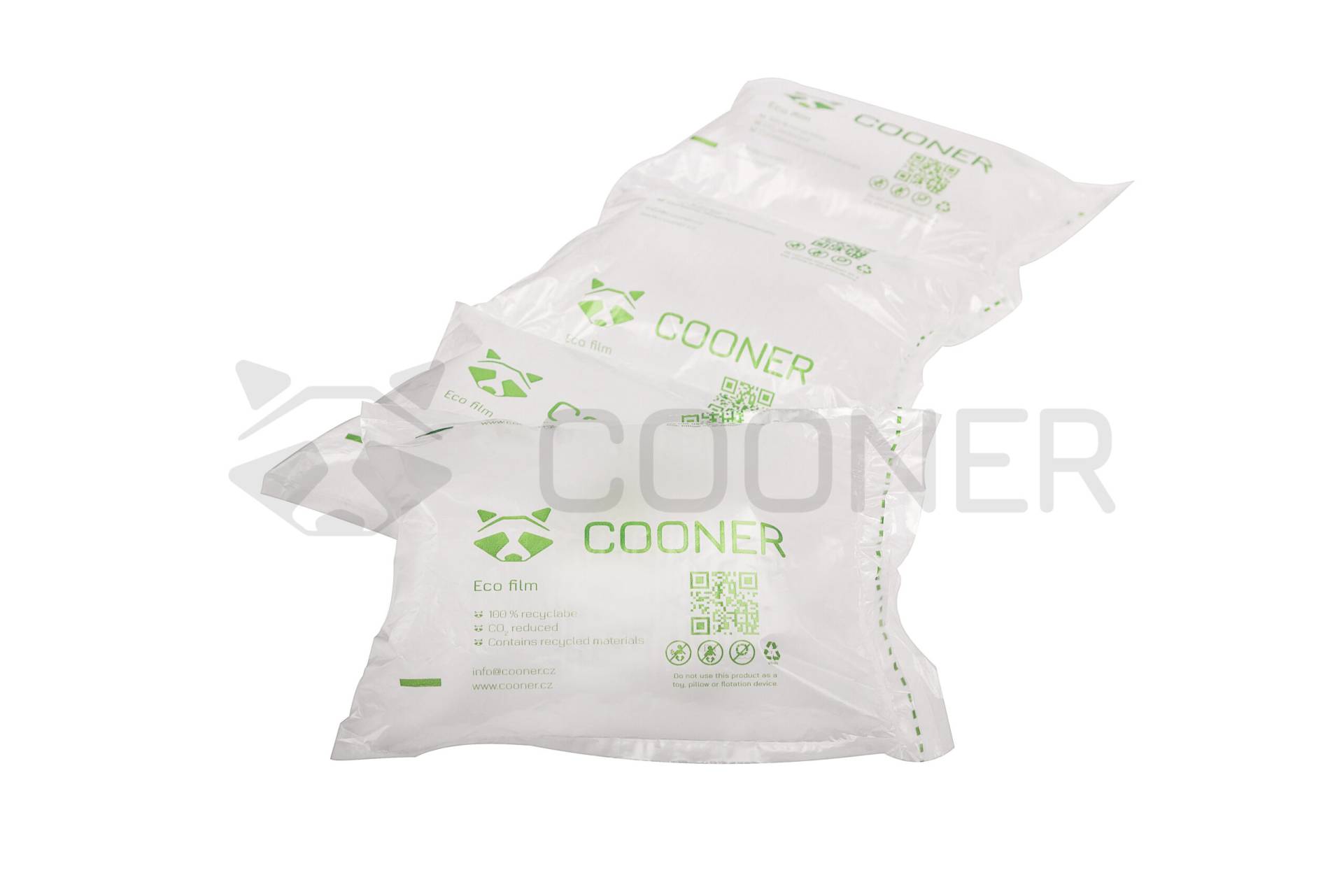
Air pillows are a modern packaging material that secures goods and increases packing safety. The film comes in rolls and is inflated by a compact machine right at the packing station, so the demands on storage space and logistics are minimal.
Types of air pillows
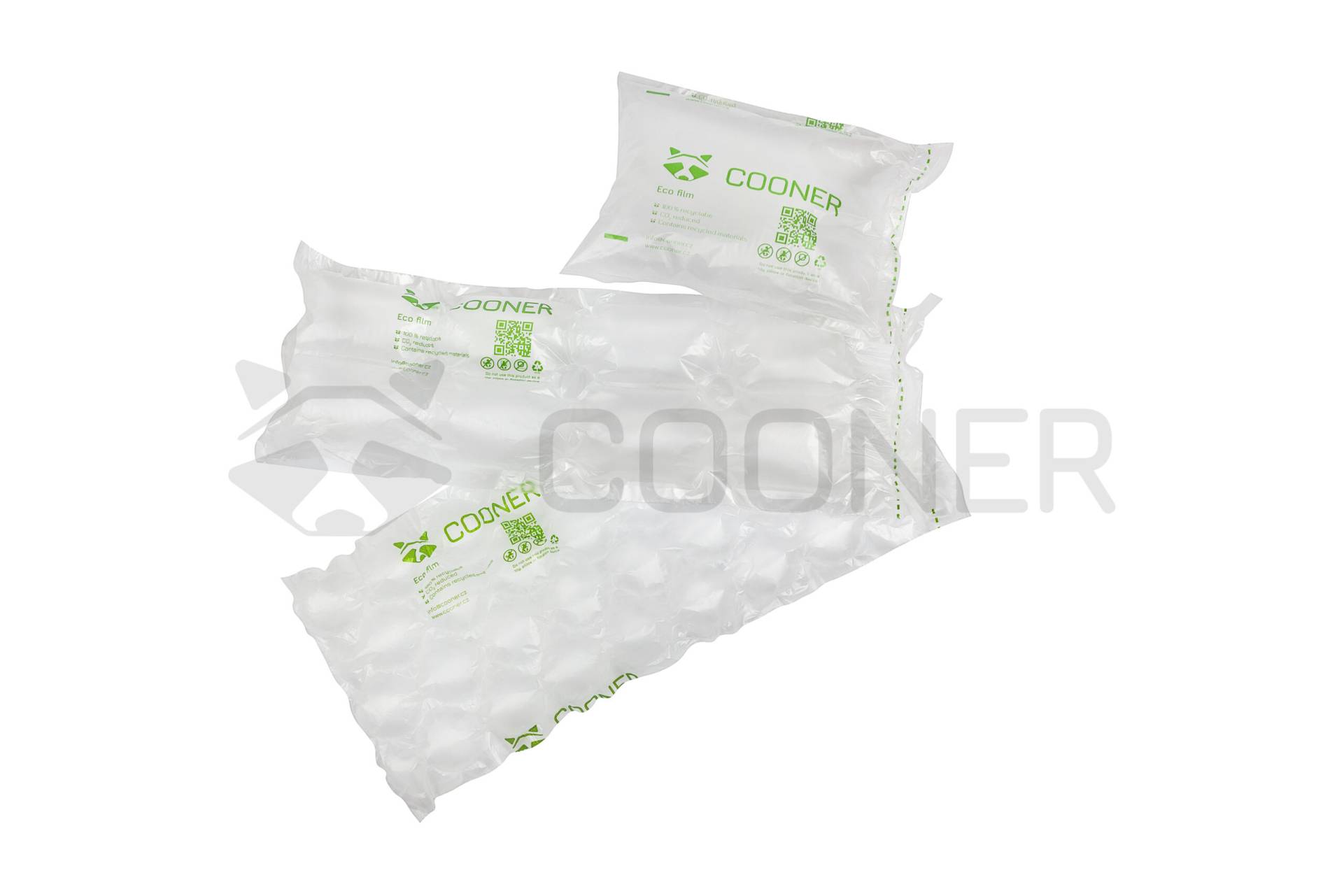
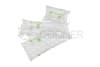
- 200 mm pillows – available with 100, 130 and 200 mm chambers for everyday void fill
- Multi-chamber air pillows 400 and 800 mm – used for wrapping and protecting goods.
You can find more information on the page Air cushions




How air void fill is made
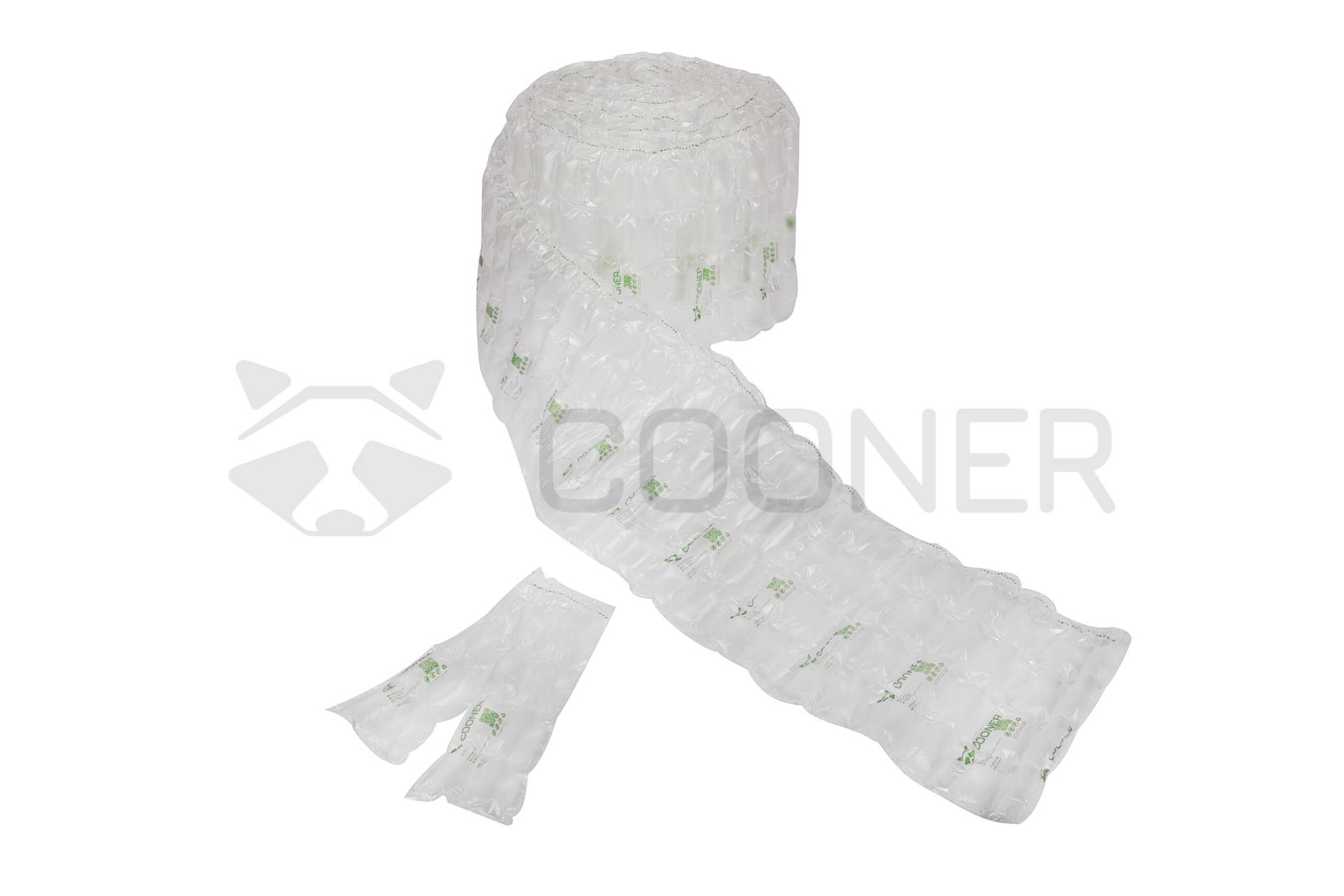
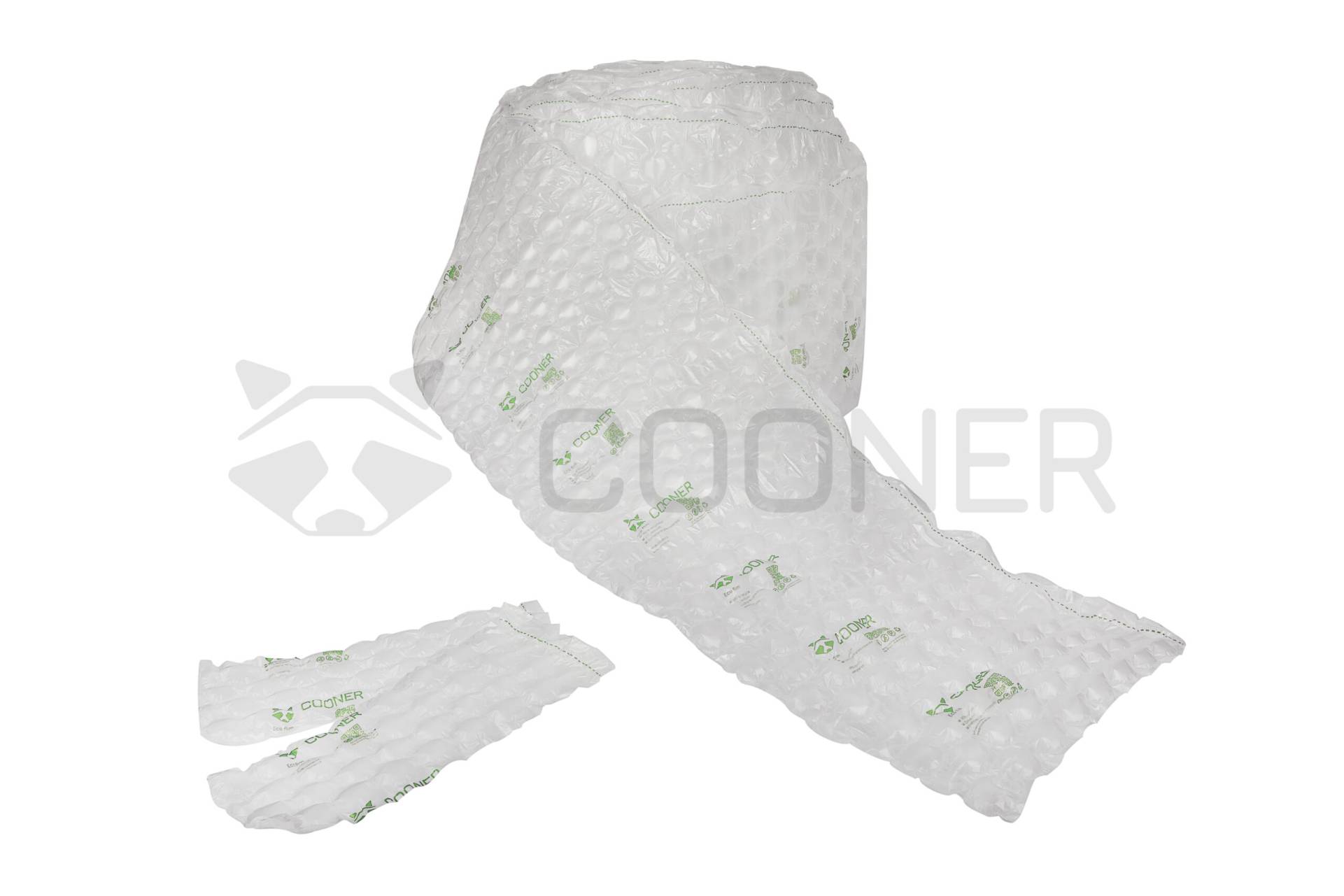
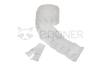
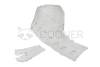
The film is supplied on a roll as a flat web that already has the chambers formed and perforations between the individual cushions. The machine unwinds the web, fills the chambers with air and heat-seals them. A continuous chain of cushions comes out of the machine, and the packer tears off the required length at a perforation.
A finished cushion is more than 99 % air, so it adds practically nothing to the weight of the shipment. Only the film on the roll needs to be stored, and the fill is produced at the moment it is needed. The machine is started with a button or a pedal; with a sensor kit it can top up the stock of fill in the collection basket by itself.
Film types
The films are divided into single-chamber and multi-chamber types. Single-chamber cushions are mainly used to fill space. Multi-chamber films have several smaller chambers side by side in one section, similar to an ice-cube bag, and protect the product itself.
- Single-chamber cushions – width 200 mm, length between perforations 100, 130, 150 or 200 mm. Void fill.
- 2 Tube and 4 Tube – width 400 mm, perforation every 150 mm, height of the inflated strip approx. 40 and 35 mm respectively. Void fill and product protection.
- 7 Tube and 7 Tube Square – width 400 or 800 mm, perforation every 170 and 190 mm respectively, height approx. 19 and 23 mm. Product protection; the low strip can also be wrapped around the product.
- Duo – width 400 or 800 mm, perforation every 150 mm, height approx. 100 mm. Filling large voids.
The most commonly used types are 4 Tube and 7 Tube.
Film types at a glance
The data from the previous section in one place. Perforation every: the distance between perforations, which divides the film into individual cushions. The most commonly used types are 4 Tube and 7 Tube.
| Type | Width | Perforation every | Strip height | Use |
|---|---|---|---|---|
| Single-chamber cushions | 200 mm | 100, 130, 150 or 200 mm | – | void fill |
| 2 Tube | 400 mm | 150 mm | approx. 40 mm | filling space and protecting the product |
| 4 Tube | 400 mm | 150 mm | approx. 35 mm | filling space and protecting the product |
| 7 Tube | 400 or 800 mm | 170 mm | approx. 19 mm | product protection; the low strip can be wrapped around the product |
| 7 Tube Square | 400 or 800 mm | 190 mm | approx. 23 mm | product protection; the low strip can be wrapped around the product |
| Duo | 400 or 800 mm | 150 mm | approx. 100 mm | filling large voids |
Film material
- Composition – Multilayer polyethylene film – a PE mono-material with no barrier layers and no metallisation. The recycled content is up to 95 %, and the film is printed with the Eco film mark.
- Rolls – LIGHT single-chamber film (cushion 200 × 130 mm) has a roll length of 2,000 m and the roll weighs approx. 9.6 kg. 7Tube film (400 × 170 mm) has a roll length of 600 m.
- Storage and operation – Dry, at ambient temperature and normal pressure. The working temperature is −20 to +80 °C; it is not classed as dangerous goods for transport.
- After use – The cushions are punctured, emptied and, once flattened, go into separate plastic collection.
Machines
Cooner is the exclusive representative of activaTec for the Czech Republic and Slovakia. The BP series machines are placed directly at the packing station:
- BP2000 – for smaller operations, up to 5 m of film per minute, weight 4 kg, dimensions 305 × 400 × 280 mm (L × H × D).
- BP4000 – for medium-sized and large operations, up to 15 m/min, 6 kg, 315 × 300 × 315 mm.
- BP6000 – for medium-sized and large operations, up to 23 m/min, 14.5 kg, 340 × 385 × 406 mm.
Single-chamber film on 1,500 m and 2,000 m rolls is processed by the BP4000 and BP6000; the BP2000 is designed for 700 m rolls. The machines can be fitted with a winder for finished fill, a mobile stand with adjustable height, a pedal or button, and a sensor kit. For integration into a packing line there is, for example, a folding arm that moves the machine electrically into the working position, or ducting that carries the fill to a basket, even over longer distances.
Points to watch
- Do not overfill the box – The cushions should fill the empty space, not stretch the box. Overpressure stresses the seals and deforms the box, which shows up when boxes are stacked.
- Sharp edges cut the film – A punctured chamber loses its air. Pad or tape over sharp corners and protrusions first.
- Void fill does not replace product packaging – Wrap fragile items individually; the cushions then keep the contents in place.
- Heavy goods and stacking loads – Air void fill alone is not enough for very heavy items or for pressure from stacked boxes.
- Box size – Void fill cannot fix a box that is too large. Choose a cardboard box as close as possible to the size of the goods.
- Machine within the packer’s reach – If the packer has to walk to fetch the fill, the time saving is lost.
Air, paper or bubble wrap
Crumpled paper is the closest alternative. It is chosen where the whole pack should be paper and go into paper recycling together with the box, and for goods with sharp edges, because paper does not lose volume when punctured. Air void fill is lighter for the same filled volume and uses less material. Bubble wrap is a different category: it is wrapped directly around the product and protects its surface, whereas cushions fill the space around goods that are already wrapped. In practice the two are often combined.
What to send with your enquiry
- Typical box and product dimensions, or the size of the space to be filled
- Number of shipments per day or per shift
- Whether you only need void fill or protection of the product itself
- Layout of the packing station and any plans to connect the fill to a packing line
- What fill you currently use and what does not work for you
Frequently asked questions
How many cushions does one roll yield?
It depends on the roll length and the perforation pitch. A roll of single-chamber film with a length of 2,000 m and 130 mm cushions yields roughly 15,000 cushions; a 7Tube roll with a length of 600 m and a 170 mm pitch yields roughly 3,500 pieces of fill.
How does the packer separate the cushions?
There is a perforation between the cushions, so the required length is simply torn off. No knife or scissors are needed.
Which machine should I choose?
It depends on your packing volume and the roll lengths you want to work with. The BP2000 is designed for smaller operations, the BP4000 and BP6000 for medium-sized and large ones. State the number of shipments and the film type in your enquiry and we will come back to you with a proposed solution.
What does the recipient do with the fill?
It is enough to puncture or cut the cushion. The air escapes, leaving a thin film that goes into separate plastic collection.
Is there an air void fill without plastic?
Yes. We also offer paper air cushions made from recycled paper, in which a layer of corn starch holds the air instead of a plastic layer.