Stretch films
Stretch film is one of the basic packaging materials. It’s used mainly to reinforce and stabilise goods on a pallet, while also providing basic protection against moisture, dust and load shifting during transport. We offer a wide range of stretch films in both hand and machine versions, in various grades and colours.
What stretch films we offer
- Hand stretch film – for hand wrapping of pallets and smaller packing volumes
- Machine stretch film – for wrapping machines and higher dispatch volumes
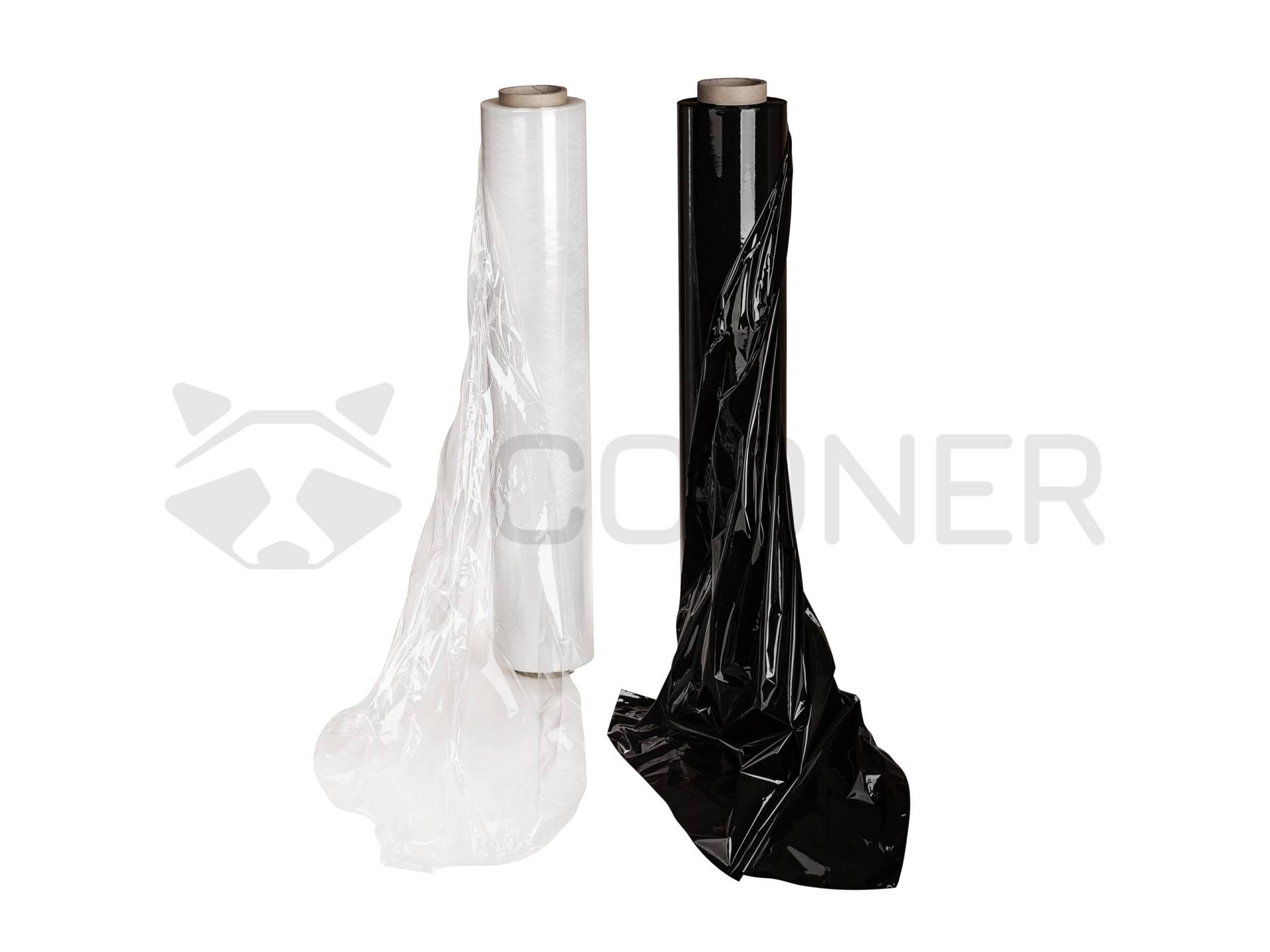
- Colour options – black, clear and coloured versions for concealing or distinguishing loads




Material and production
Stretch films are made mainly from linear low-density polyethylene (LLDPE), a copolymer of ethylene with butene, hexene or octene. Hexene and octene give the film higher elongation and better puncture resistance than butene. The film breaks only at around 500 % elongation; in use it is stretched by 100–300 %.
- Cast film – The melt is extruded through a flat slot die and cooled on rollers. The film is clear and glossy and unwinds quietly. It suits standard and lighter loads and applications where labels or barcodes are read through the film.
- Blown film – The melt is blown into a tube and cooled by air. The film is hazier and noisier when unwinding, but more resistant to puncture and tear propagation. It is chosen for heavy loads and goods with sharp edges.
The film clings on its inner side, so the individual layers bond together without adhesive. One-sided cling film has a smooth outer side, so pallets do not stick to each other in the warehouse or in transit and do not tear each other’s film.
How the film holds the load
The load is held by containment force – the force with which one layer of stretched film presses on it, multiplied by the number of layers. The same containment force can be achieved with a thicker film and fewer revolutions, or with a thinner film and more layers. Thickness alone therefore does not determine the quality of the wrap. Excessive wrap force, however, will break the film, especially on irregular loads and with thin films.
The stability of a unit load is verified by a test to the EUMOS 40509 standard on an acceleration bench. The load must not shift permanently by more than 5 % of its height, and the elastic deflection must not exceed 10 % of its height. The standard is referred to in Directive 2014/47/EU on technical roadside inspections. The result applies only to the specific combination of goods, pallet and wrapping.
Hand and machine film
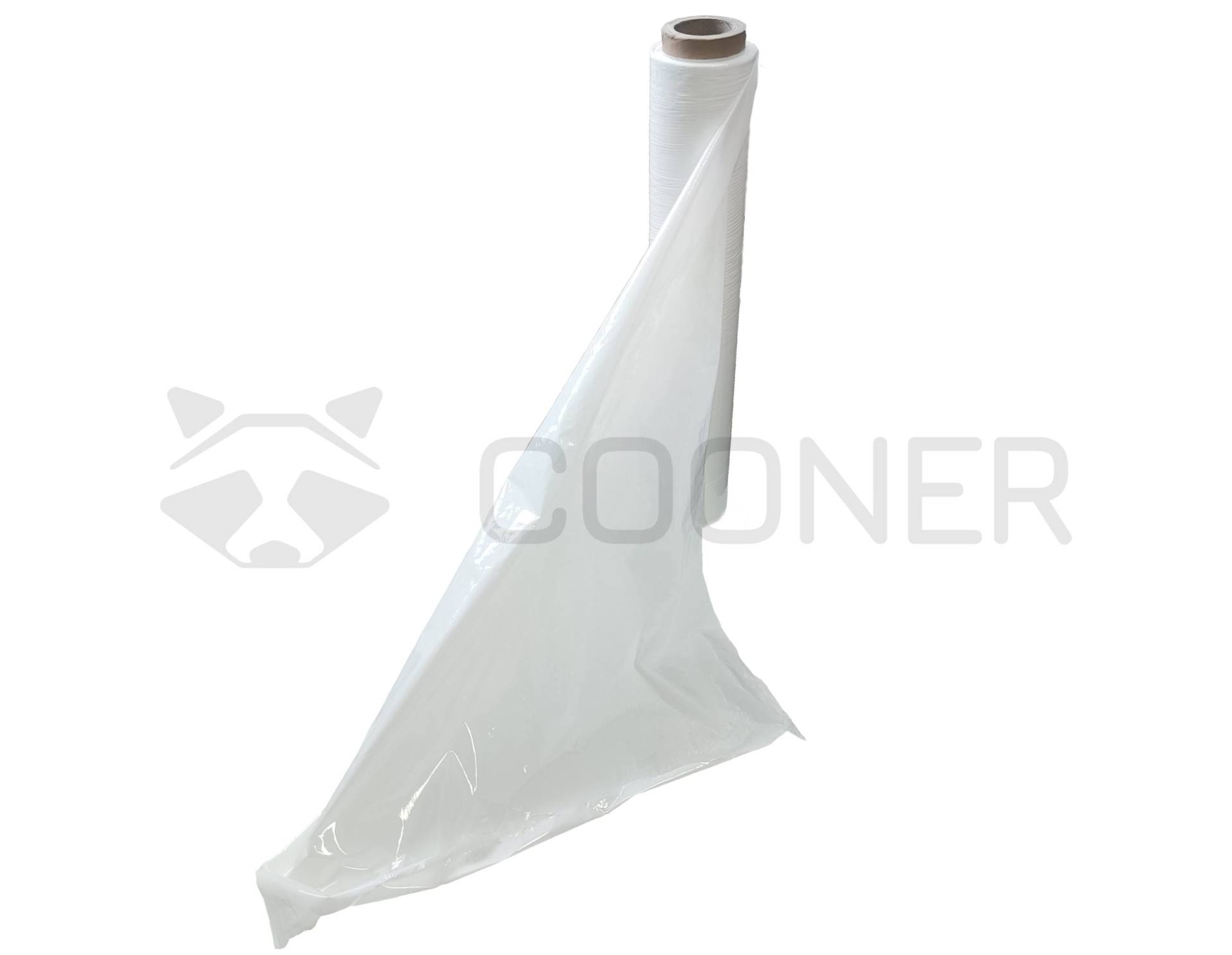
- Hand film – Rolls on a cardboard core, typically 500 mm wide and 17–23 µm thick. It is applied by hand or with a hand dispenser. How far the film is stretched depends on the operator, so both consumption and wrap strength vary.
- Pre-stretched hand film – Stretched during manufacture, so it is thin – 8 µm, for example – and hardly stretches any further during wrapping. The operator needs less force and the roll is lighter.
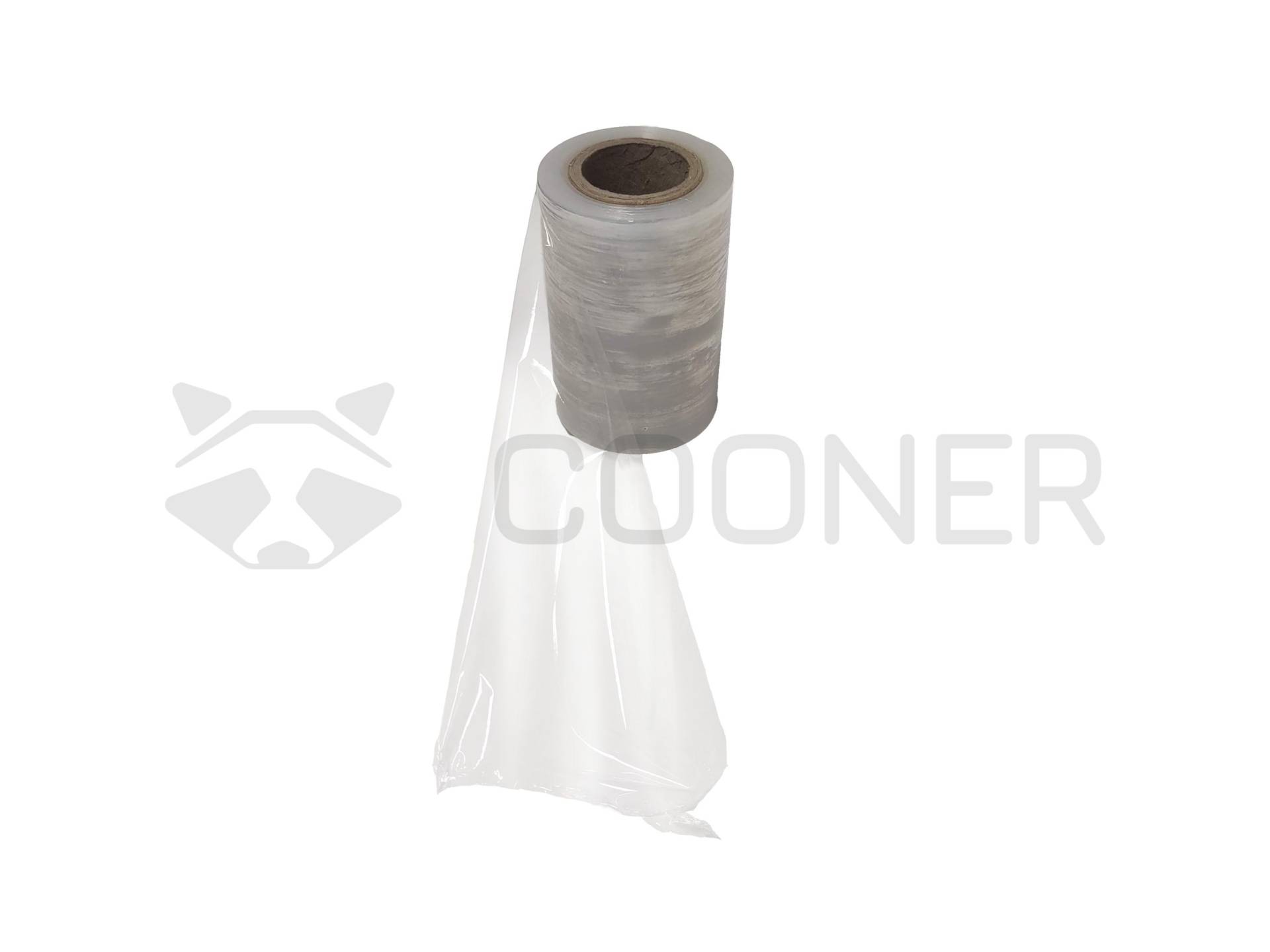
- Narrow rolls, known on the Czech market as „granát“ – Around 100 mm wide, 100–150 m long, often with an extended core that serves as a handle. They are used to bundle profiles and pipes, hold cartons together or wrap smaller items.
- Machine film – 500 mm wide rolls on a core with a 76 mm inner diameter for semi-automatic and automatic stretch wrappers. The machine’s pre-stretch unit stretches the film between two rollers turning at different speeds before it is applied. Typical pre-stretch is 150–300 %; at 300 %, one metre of film becomes four.
We supply hand film in 500 mm width and in 100 mm narrow rolls, 17–30 µm thick, in black and white as well as clear. We supply machine film 15–30 µm thick, in rolls weighing around 16–17 kg.
Coloured and special films
- Black and white film – Opaque; it hides the goods from view and makes it harder to identify the contents of the pallet.
- Coloured film – Used to distinguish loads, for example by customer or batch.
- Perforated film – The holes allow air exchange for goods where moisture must not condense under the wrap.
- UV-stabilised film – For pallets that stand outdoors for longer periods.
- Film with recycled content – Hand and machine films with 30 % or more post-consumer recycled content are available on the market. For standard plastic packaging, which includes stretch film, the PPWR regulation will require at least 35 % of such recycled content, from 1 January 2030 at the earliest.
Choosing the film
- Weight and shape of the load – 17–20 µm is sufficient for light, regular pallets, 23–25 µm for standard loads, and 30–35 µm or blown film for heavy goods and sharp edges.
- Sharp edges and corners – The film is protected by cardboard edge protectors, which also spread the pressure on the carton corners.
- Volume – Hand film is sufficient for individual pallets; pre-stretched hand film saves the operator effort. Machine film with pre-stretch is used where larger numbers of pallets are shipped regularly.
- Stretch wrapper – The roll width, core inner diameter and roll weight must match the machine.
Points to watch
- Locking the load to the pallet – The film must also wrap onto the pallet. Otherwise the load will slide across the pallet as a block when the vehicle brakes.
- Top and bottom of the load – These need more revolutions than the middle; on machines, the number of revolutions is set separately.
- Pallets sticking together – If wrapped pallets stick to each other, choose a one-sided cling film.
Stretch film or another method
Stretch film is stretched cold. Shrink film, by contrast, is shrunk by heat after it has been fitted, and a stretch hood is a film hood pulled over the pallet by a machine. Heavy, rigid loads are often secured with strapping, where the edges need protecting. For repeated in-house transport, a returnable pack is the alternative – crates and boxes or corrugated plastic. The unit load is built on pallets, and layers of goods are separated by layer pads.
What to send with your enquiry
- Hand or machine wrapping; for a machine, the wrapper type, pre-stretch unit and core inner diameter
- Pallet dimensions and weight, and the type of goods (cartons, sacks, loose parts, sharp edges)
- Number of pallets per day or per month
- Your current film (thickness, width, roll length) if you want to replace it
- Colour, UV stabilisation, perforation, recycled content requirements
Frequently asked questions
What is the difference between hand and machine film?
Machine film is wound on heavier rolls with a core for stretch wrappers and is designed for high pre-stretch in the machine. Hand film comes on lighter rolls and is stretched by the operator, so the result depends more on who is wrapping.
What does 250 % pre-stretch mean?
That the film is stretched by 250 % of its length before it is applied to the load. One metre of film from the roll therefore becomes 3.5 metres of film on the pallet.
Is a thinner film worse?
Not necessarily. What matters is the containment force, i.e. the force of one layer multiplied by the number of layers. A thinner film with higher pre-stretch or more layers can hold the load just as well. Sharp edges and heavy items, however, need a thicker or blown film.
Where does used film go?
Clean stretch film is polyethylene and belongs in separate plastics collection; businesses collect it separately and hand it over to a waste collection or recycling company. Film contaminated with product residue or with paper labels stuck to it is harder to recycle.