
Void fill for a box is not chosen by material but by what it has to do. To fill empty space, crumpled paper or single-chamber air cushions are enough. Heavy or fragile goods need cushioning and fixing: multi-chamber air cushions or a multi-ply paper pad. Wrapping the surface is done by bubble wrap or its paper alternative, honeycomb wrap paper. Under the PPWR any void fill counts as empty space, so it has no effect on the size of the box.
Three functions, three groups of materials
| What you need | What to use | When it makes sense |
|---|---|---|
| Fill empty space | crumpled paper (single-ply 50 and 70 g), single-chamber air cushions (width 200 mm, length 100, 130, 150 and 200 mm), Duo cushions (height about 100 mm) | lighter goods that must not move in the box |
| Cushion and fix | multi-chamber cushions (2 Tube, 4 Tube, 7 Tube), multi-ply paper pad (70, 70+70, 90 and 120 g) | heavier or fragile goods, shipments with sharp edges |
| Wrap the surface | bubble wrap, honeycomb wrap paper (70 and 90 g), bubble paper | protecting the surface and edges; the product is wrapped like a gift |
All dimensions and paper weights given are from our pages on air pillows, crumpled paper and paper void fill.
Fill the space: paper or air
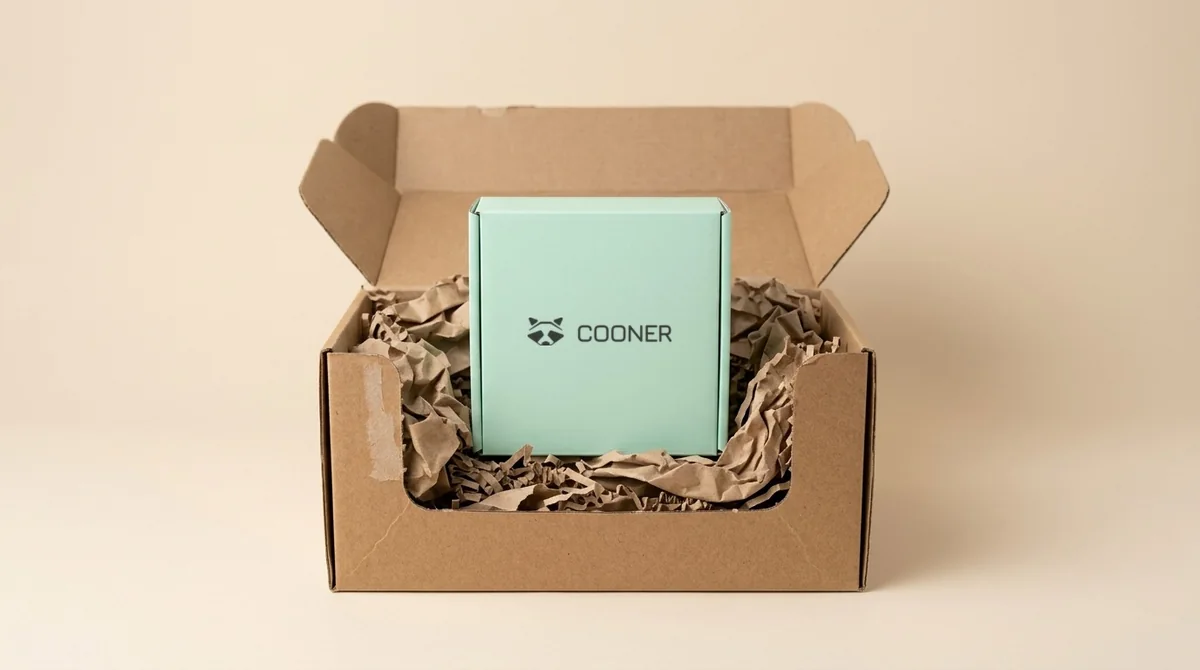
- Crumpled paper is recyclable and together with a cardboard box forms a single-material package. A machine makes it from a roll or a folded stack of paper right at the packing table. Single-ply paper of 50 and 70 g suits lighter goods, a multi-ply pad heavier ones.
- Air cushions are inflated from film on a roll. The film is recyclable. You ship and store only the film, not air. Single-chamber cushions fill empty space; multi-chamber ones fill it and protect the product at the same time.
The PA4600 machine also turns single-layer paper into a compact paper “cone” with higher stiffness. It cushions much better than common processing of single-layer paper, almost like a multi-layer pad, and takes up less space. Details are on the Paper void fill page.
Practical things decide: how many shipments you pack per day, how much room you have at the packing table and in the warehouse, and whether the void fill has to be made of paper. You will find the machines in the Void fill systems overview.
Cushion and fix heavy or fragile goods
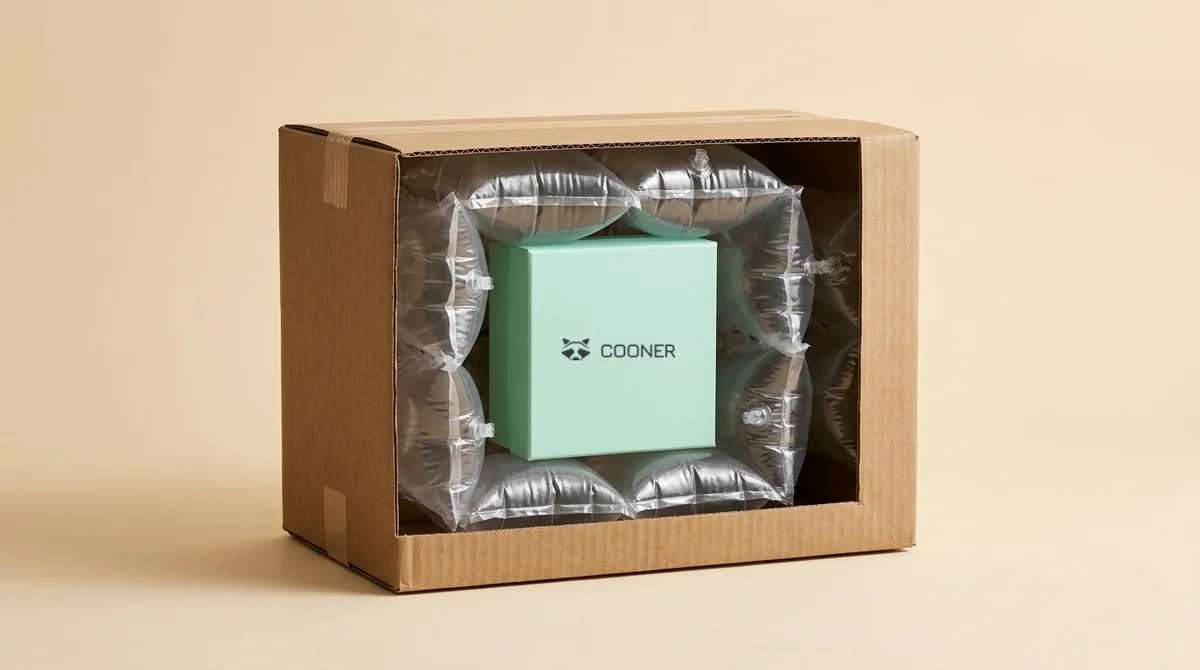
Multi-chamber cushions form a continuous layer that holds the product in place and absorbs impacts. The 7 Tube type is flat (height about 19 mm) and suits product protection, the Duo type (about 100 mm) fills a larger space. The paper alternative is a multi-ply pad from the PA5000 and PA6000 machines. Higher paper weights withstand a greater load. A shipment must not move inside the box when you shake it.
Sharp edges: for shipments with sharp edges choose paper. An air cushion can be cut through by a sharp edge and stops cushioning.
Wrap the surface: bubble wrap and its paper alternative
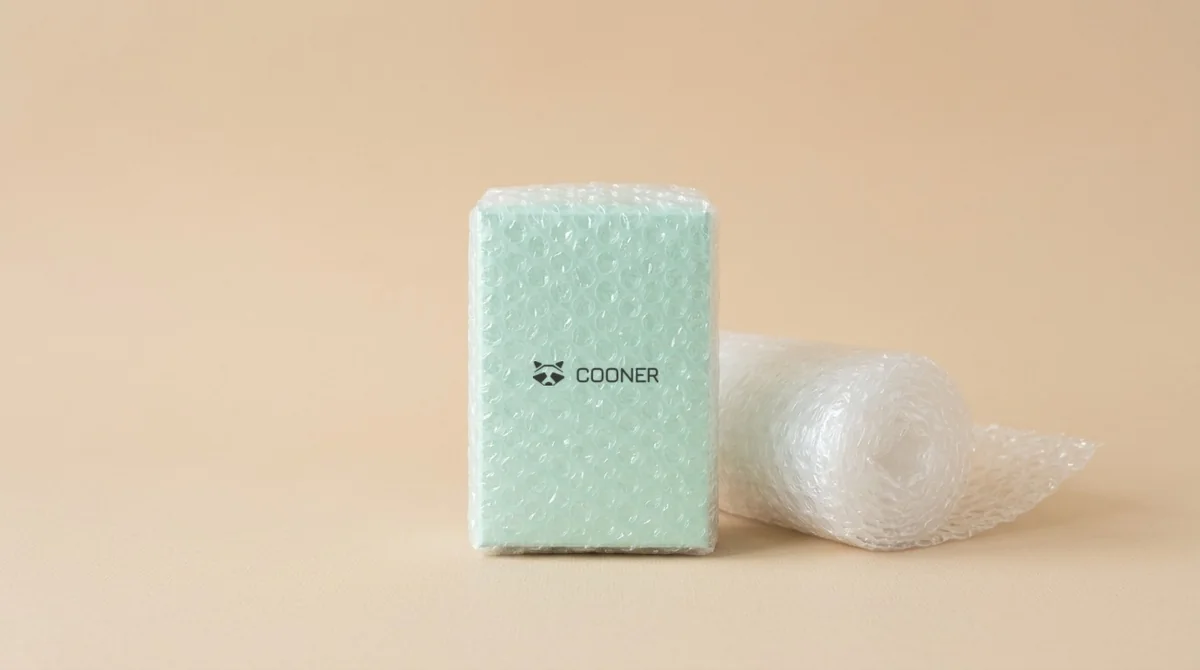
Bubble wrap is the best-known wrapping material. It is made of low-density polyethylene (LDPE). Two-layer film protects lighter and medium-heavy goods; three-layer film has the bubbles closed on both sides and suits heavier items and longer transport. Film with a polyamide barrier layer keeps air longer but is no longer a single material. Anti-static (pink) film limits the build-up of static charge.
The paper alternative is honeycomb wrap paper. It is slit, and when stretched it forms a mesh structure that wraps the goods much like bubble wrap. Details are on the pages for bubble wrap and paper void fill.
Shipment weight and environmental impact
Void fill adds weight to the shipment and therefore to the freight cost. Fees for the collection and recycling of packaging are also calculated from weight. According to the EKO-KOM price list valid from 01. 01. 2026, the rate for single-use grouped and transport packaging in the Czech Republic is CZK 398 per tonne for paper and cardboard and CZK 830 per tonne for plastics (CZK 200 per tonne for recycled plastic), excluding VAT.
A Czech study from the University of Chemistry and Technology, Prague (UCT Prague; 2020, no external funding) compared two ways of packing four model shipments of a large Czech cosmetics and household products retailer. The goods weighed 2.99 kg (shipments 1 and 2) and 5.96 kg (shipments 3 and 4). The paper void fill weighed 0.42 and 0.49 kg, the HDPE plastic cushions 0.02 and 0.06 kg, so the paper was about 8 to 21 times heavier. The shipments with cushions came out better for climate and in most other impact categories; the only exception was fossil resource depletion for the heavier shipments (paper 1 % better). The carbon footprint of a shipment with paper was about 10 % higher (3.44 versus 3.12 kg CO₂ eq. and 3.68 versus 3.34 kg CO₂ eq.). At these weights and rates, the fee for the void fill comes to only a fraction of a koruna (indicative calculation): paper about CZK 0.17 to 0.20 per shipment, cushions about CZK 0.02 to 0.05. For the same volume plastic void fill weighs an order of magnitude less, so the fee per shipment is lower for air cushions even though the rate per tonne is higher for plastics.
The void fill was not the largest burden, though: the largest were energy use in the logistics centre (2.18 kg CO₂ eq. per shipment) and the cardboard box (0.83 kg CO₂ eq.). The authors point out that life cycle assessment does not yet include pollution by plastics and microplastics, and that the conclusion applies to the described shipments. The study deals with void fill only marginally; its main topic is online sales of household products. The full study: Matuštík, Kočí: A Comparative Life Cycle Assessment of Electronic Retail of Household Products, Sustainability 12 (11), 4604.
After unpacking. An air cushion only needs to be punctured, and a small ball of plastic is left for the bin. The same volume of crumpled paper quickly fills the bin, which raises the demands on waste collection. According to the 2018 measurement, after deflation the void fill in a medium box took about 2.14 dm³ for cushions and 10.95 dm³ for paper.
More measurements and sources are in the article Paper or air cushions?; bags and carrier bags are compared in the article Paper or plastic for bags and carrier bags?
PPWR: void fill does not make the box smaller
Under Regulation (EU) 2025/40, space filled with paper cuttings, air cushions or bubble wrap is considered empty space. The 50 % empty space limit applies at the earliest from 2030. No material has an advantage; only a smaller box improves the ratio. Details are in the article PPWR and void fill for boxes.
Frequently asked questions
What types of void fill are there?
Paper (crumpled paper, multi-ply pad, honeycomb wrap paper), air (single-chamber and multi-chamber cushions) and bubble wrap. Each type has a different function: filling, cushioning or wrapping.
What can replace bubble wrap?
The paper alternative is honeycomb wrap paper. For cushioning inside the box, use multi-chamber air cushions.
What is the best void fill for fragile goods?
Fragile goods need cushioning and fixing: multi-chamber cushions or a multi-ply paper pad, possibly with the product wrapped in bubble wrap or wrap paper.
Is paper more ecological than plastic?
It cannot be said in general. In a Czech study from 2020, plastic cushions came out better than paper void fill for climate and in most other categories for four model shipments. The largest burden, however, was energy use in the logistics centre, and the assessment does not include pollution by plastics. Weight, transport and energy decide, not just the material.
Does void fill count towards the PPWR empty space limit?
Yes. Paper, air cushions and bubble wrap all count as empty space.
Sources
- Matuštík, J., Kočí, V.: A Comparative Life Cycle Assessment of Electronic Retail of Household Products. Sustainability 12 (11), 4604, 2020. doi.org/10.3390/su12114604.
- Regulation (EU) 2025/40, Article 24: EUR-Lex.
- Dimensions and parameters of the materials: Cooner.cz pages (links in the text).
Not sure what to choose for your goods? Write to us with the type of goods, their weight and the size of your most common parcel. We will recommend a void fill and a machine.
