Protective sleeves
Protective sleeves are netting or wraps that are simply stretched over a product to protect its surface from abrasion, scratches, and impacts during handling and transport. They are suitable wherever a flawless surface matters – from glass and bottles to cosmetic vials and polished or painted parts. They are manufactured in both foam and paper variants, allowing you to choose based on product sensitivity and eco-friendly requirements.
What protective sleeves are used for
- Surface protection – prevents scratching of polished, varnished and sensitive surfaces
- Bottles, glass and cosmetics – a popular protection for wine, spirits, perfumes and glass vials
- Machine and metal parts – protection of machined and polished components during dispatch
- Foam and paper versions – foam for maximum protection, paper as the recyclable option


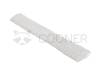


PE foam sleeves
Foam net is made from non-crosslinked polyethylene foam (EPE). The polyethylene is melted in an extruder and mixed with a blowing agent, usually a gas, and the closed-cell foam is formed into a flexible tubular net.
- Properties – The net is light, flexible and does not absorb water. Its smooth surface does not rub against the product, and the closed cells do not trap dirt.
- Size – Specified by the range of product diameters it stretches over, and by length. The foam is, for example, 2 mm thick. Nets are supplied cut to length or on rolls from which the required length is cut off.
- Uses – Bottles, glass and porcelain, cosmetic flacons, machined, polished and painted parts, fruit.
- Limitations – The net protects the surface and cushions light knocks. It is not designed for heavy impacts or sustained compressive loads. An over-stretched net becomes thinner and cushions less, and high temperatures soften the polyethylene.
Paper sleeves
A paper sleeve is made of pressed corrugated board. Its flexibility comes from the corrugation: the sleeve slides over a bottle or part and adapts to its shape. The corrugated wall also absorbs impacts and keeps products apart so that they do not rub against each other.
After use, a paper sleeve goes into paper recycling. It cannot withstand water, however, and foam is the better choice wherever moisture is a risk.
Sleeves we supply
PE foam nets and paper sleeves made from pressed corrugated board. The size is chosen according to the diameter and length of the product.
Choosing a sleeve
- Surface – Glossy, painted and polished surfaces need a smooth material that does not rub against them.
- Weight and fragility – A sleeve protects the surface. Heavy and fragile items belong in a box with dividers or retention.
- Diameter – The net should flex on the product, not be stretched to its limit.
- Environment – In damp and cold conditions, where condensation forms, foam holds up and paper does not.
- Sorting by the recipient – If the whole shipment should be paper-based, choose a paper sleeve.
Points to watch
- A sleeve is not a shipping pack – Bottles sent by parcel carrier need a box with dividers or cradles, for example wine packaging or moulded pulp inserts.
- Dirt under the sleeve – Dust and particles between the sleeve and the product can scratch a sensitive surface. Clean the product before fitting the sleeve.
- Size – A net that is too small is over-stretched and cushions less; one that is too large slips on the product.
A sleeve or another form of protection
For wrapping irregularly shaped products, bubble wrap or bubble bags are suitable. Besides nets, PE foam is also made into film on rolls, cut sheets and die-cut shapes. The empty space in the box is filled with air cushions or crumpled paper.
What to send with your enquiry
- Product: shape, smallest and largest diameter, length and weight
- Surface: glass, paint, polished metal, print
- Material: PE foam or paper
- Form of supply: pieces cut to length or rolls
- Expected monthly consumption
- Environment: damp, cold, outdoor storage
Frequently asked questions
What is the difference between a foam sleeve and a paper sleeve?
A polyethylene foam net does not absorb water and is also suitable for damp conditions. A paper sleeve, however, cannot withstand water.
Is a sleeve enough to send a bottle by parcel?
Not on its own. The sleeve protects the bottle’s surface and cushions minor knocks between bottles. For parcel shipping, the sleeved bottle belongs in a box with dividers or retention.
How do I choose the size?
By the product’s diameter at its widest point and by the length the sleeve should cover. The net should flex on the product. Send us the dimensions or a sample of the product.
Can a sleeve be reused?
An undamaged foam net can. A paper sleeve can be reused if it has stayed dry and is not tearing.
Where does a used sleeve go?
A polyethylene foam net goes into separate plastics collection, a paper sleeve into paper recycling.